
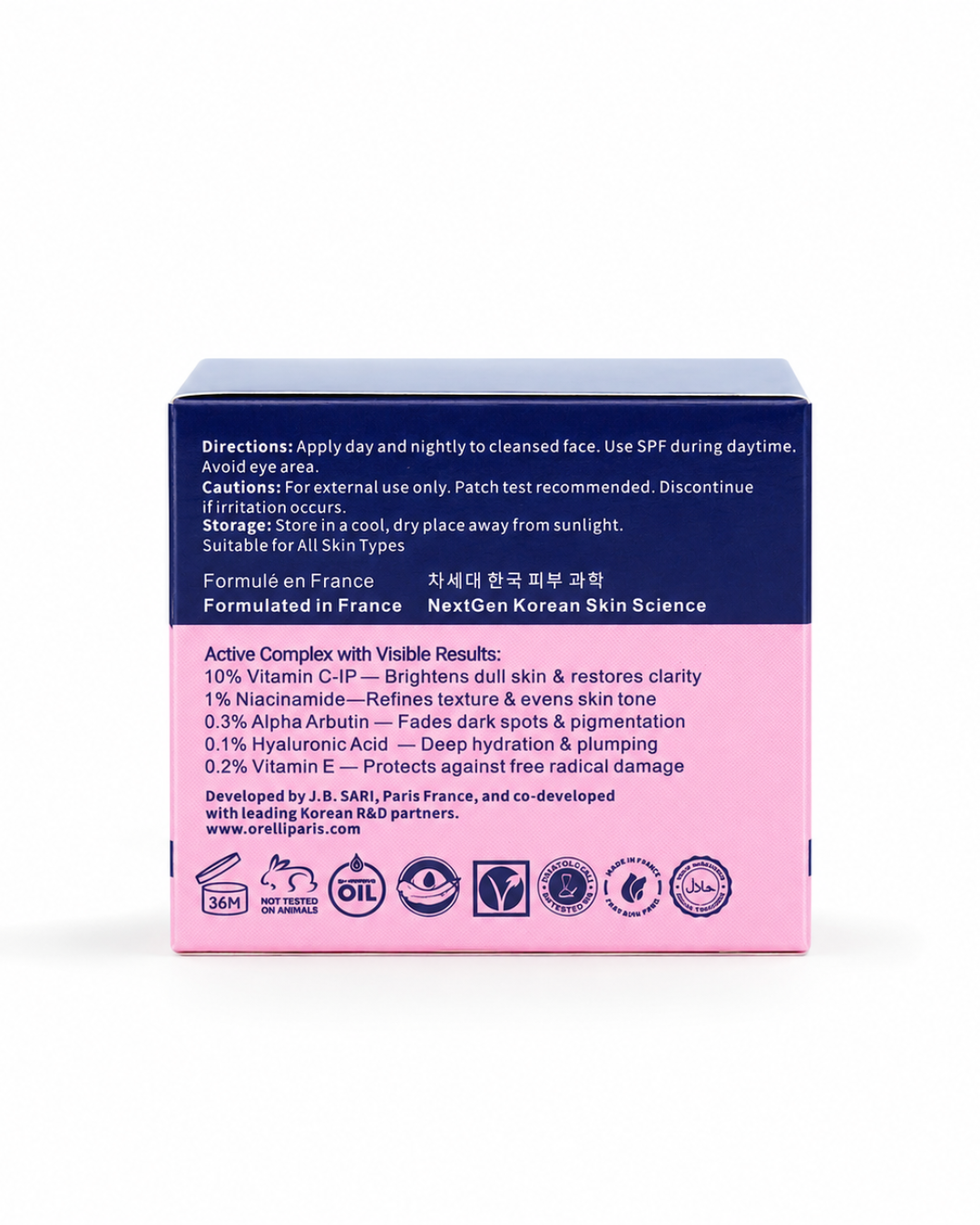
When people weigh up vitamin C vs niacinamide, they often assume the two do the same job because both appear on so many “brightening” labels. They don’t. Vitamin C is mainly an antioxidant that helps defend skin against everyday environmental stress, while niacinamide (a form of vitamin B3) is a multi-tasker better known for supporting the skin barrier, oil balance and a more even-looking tone. Knowing that difference makes it much easier to decide which one belongs in your routine first.
This guide compares the two side by side: how each works, what concerns each is commonly chosen for, how they differ in stability, texture and tolerance, and when in the day each tends to fit best. If you want the full background on either ingredient on its own, start with our guides to vitamin C in skincare and niacinamide for beginners.
Vitamin C vs Niacinamide: The Core Difference
The simplest way to think about it: vitamin C is a protector, and niacinamide is a supporter. Both can contribute to brighter-looking skin, but they get there by different routes.
How vitamin C works: an antioxidant first
Vitamin C is one of the skin’s own antioxidants. Applied topically, its main role is to help neutralise free radicals generated by UV exposure and pollution, the kind of daily stress that contributes to dullness and uneven tone over time. A review in Nutrients on the roles of vitamin C in skin health also notes its involvement in collagen formation and its potential to influence the look of pigmentation. That is why it is so often associated with “glow”.
How niacinamide works: a multi-functional vitamin B3
Niacinamide is less of a specialist and more of an all-rounder. A dermatology review of niacinamide’s mechanisms and topical use describes evidence for supporting the skin barrier, helping moderate the look of excess oil, and reducing the transfer of pigment within the skin, which can help tone look more even. Many studies use concentrations of around 2–5%; a higher percentage is not automatically better and can bother some skin types.
Side-by-Side Comparison Table
| Feature | Vitamin C | Niacinamide |
|---|---|---|
| What it is | Antioxidant (L-ascorbic acid or a derivative) | A form of vitamin B3 |
| Main role | Helps defend against environmental stress; supports radiance | Supports the barrier, oil balance and even-looking tone |
| Commonly chosen for | Dullness, look of dark spots, early signs of ageing | Oiliness, visible pores, redness-prone or easily stressed skin, uneven tone |
| Stability | Pure form oxidises with light, air and heat; derivatives are usually steadier | Generally stable in most formulas |
| Typical texture | Watery serums, sometimes slightly tacky; also creams and oils | Light serums, gels, moisturisers |
| Sensitivity | Pure, low-pH forms can tingle | Usually well tolerated; high percentages may irritate some people |
| Best time of day | Often mornings, under sunscreen | Morning, night or both |
Which Skin Concerns Is Each Commonly Chosen For?
Because their jobs differ, each tends to be picked for a slightly different set of goals.
Vitamin C is usually the first thought when skin looks tired, flat or lacking radiance, and when someone wants extra daytime antioxidant support alongside sunscreen. It is also popular for the look of sun-related dark spots and for people starting to think about early signs of ageing.
Niacinamide is often chosen for skin that gets shiny by midday, shows visible pores, looks blotchy or feels easily stressed. Because it supports the barrier, it is a common pick for people whose skin reacts to strong actives, and it also appears in many routines for uneven tone and post-acne marks. If dark spots are your main focus, you can browse options by concern in our dark spots and uneven tone collection.
Stability, Texture and Sensitivity Compared
Stability and storage
This is where the two differ most. Pure L-ascorbic acid is effective but fragile: exposure to air, light and heat makes it oxidise, and a serum that has turned yellow, orange or brown is a sign it has degraded. Opaque or airless packaging helps. Derivatives such as ethyl ascorbic acid, sodium ascorbyl phosphate, magnesium ascorbyl phosphate, ascorbyl glucoside and tetrahexyldecyl ascorbate are generally more stable, though they behave differently in skin and are not interchangeable one-for-one. In a warm, humid Indian summer, storing vitamin C away from sunny windowsills and steamy bathrooms makes a real difference.
Niacinamide is far more forgiving. It is generally stable across a wide range of formulas, which is one reason it turns up in everything from toners to moisturisers.
Texture and feel
Vitamin C serums tend to be watery and can feel a little tacky, while oil-soluble derivatives often come in silkier or oilier textures. Niacinamide usually sits in light gels and serums that absorb quickly, which many people with oily skin appreciate in humid weather or under air-conditioning all day.
Vitamin C vs niacinamide for sensitive skin
Low-pH L-ascorbic acid can tingle or sting, especially on dry or compromised skin. Niacinamide is usually gentler, although very high concentrations can cause redness or flushing in some people. Whichever you try, patch test first and introduce one new product at a time. Persistent burning, rashes or reactive skin conditions are worth discussing with a dermatologist.
Morning or Night: When Does Each Fit?
Vitamin C is most often used in the morning because its antioxidant role complements daytime protection. It supports sunscreen but never replaces it; broad-spectrum SPF remains the non-negotiable step for anyone concerned about dark spots. Niacinamide is flexible and works in either routine, so it slots easily into whatever step you already have. And yes, the old idea that the two cannot share a routine is largely outdated; we cover how to combine them in a separate article.
Which Should I Choose First? A Simple Decision Guide
If you are new to actives, starting with just one makes it easier to see how your skin responds. Use your main concern and skin type as the tiebreaker:
- Dull, tired-looking skin: vitamin C is the natural first choice.
- Oily skin or visible pores: start with niacinamide.
- Sensitive, reactive or barrier-stressed skin: niacinamide is usually the gentler starting point.
- Dark spots from sun exposure: either can suit; vitamin C adds daytime antioxidant support, niacinamide suits those who prefer a gentler option.
- Post-acne marks on acne-prone skin: niacinamide is often easier to tolerate alongside acne care.
- Normal or dry skin wanting more radiance: vitamin C, ideally a gentle derivative if your skin is dry.
Not sure what your skin type is? Our guide to building a routine around your skin type walks you through it. Give your chosen ingredient several weeks of consistent use before judging it, and add the second later if you still want to.
Frequently Asked Questions
Is vitamin C or niacinamide better for dark spots?
Neither is universally better; both can help improve the look of uneven tone through different routes. Vitamin C adds antioxidant support, while niacinamide is often easier on sensitive skin. Daily sunscreen matters more than either, and stubborn pigmentation such as melasma deserves a dermatologist’s opinion.
Which is better for oily skin, vitamin C or niacinamide?
Niacinamide is usually the more targeted choice for oily skin, as research links it to helping moderate the look of excess oil. Vitamin C can still suit oily skin, particularly in a lightweight serum.
Can beginners use vitamin C and niacinamide?
Yes, both are beginner-friendly when introduced gradually. Start with one, patch test, use it consistently for a few weeks, then decide whether to add the other.
Why did my vitamin C serum turn brown?
A yellow, orange or brown colour usually means the vitamin C has oxidised after exposure to air, light or heat, and it is likely less effective. Store it closed, cool and out of direct light, and replace it once it darkens noticeably.
Choosing Between Them With Confidence
The vitamin C vs niacinamide question is less about which ingredient wins and more about which job your skin needs done first. Reach for vitamin C when you want antioxidant support and more radiance by day; choose niacinamide when oil, barrier comfort or easily stressed skin is the priority. Start with one, keep sunscreen constant, and let your skin’s response guide the next step.
This article is general cosmetic information and is not medical advice. For persistent skin concerns, please consult a qualified dermatologist.