
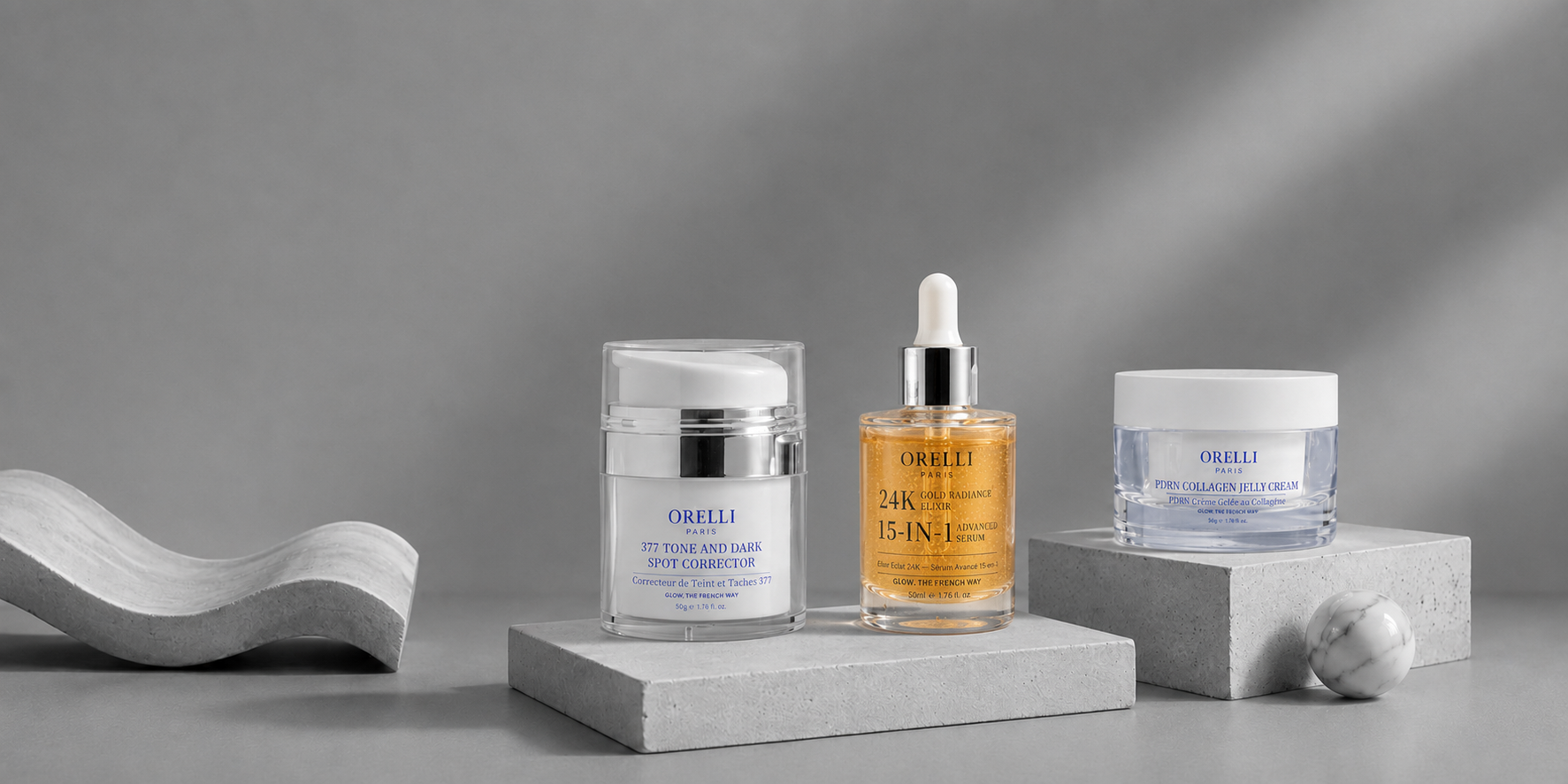
A niacinamide routine can be very simple: niacinamide suits both morning and night, it usually goes on after cleansing and before your moisturiser, and one well-chosen product used consistently is often enough. Because it is generally well tolerated and layers easily with most other steps, the real question is not whether it fits into your routine but where it fits best for your skin, your other actives and your climate. This guide walks through exactly how to use niacinamide in a skincare routine, day to day.
If you are completely new to the ingredient itself, start with our beginner’s guide to niacinamide, which covers what it is and what it may help with. Here we focus on placement, pairing and patience.
Morning, Night or Both? Timing Your Niacinamide Routine
Niacinamide is a form of vitamin B3, and unlike some actives it is not known to make skin more sensitive to sunlight, so there is no strict rule about timing. That flexibility is useful: you can put it wherever it is easiest to stay consistent.
- Morning: a good choice for oily or combination skin, since a light niacinamide serum or gel under sunscreen can help skin look less shiny through a humid Indian day.
- Night: works well if your mornings are rushed, or if you prefer a richer niacinamide moisturiser before bed.
- Both: fine for many people, especially at modest strengths, but not required. Twice daily is only worth trying once your skin has settled on once a day.
For a broader look at what each half of the day is for, see our comparison of morning vs night skincare.
Serum, Moisturiser or Toner: Which Niacinamide Format?
Niacinamide turns up in almost every product category, and the format mostly decides where it sits in your routine.
Serums are the most common way to add it deliberately. They are usually water-based, absorb quickly and often state the percentage on the front. Many studies have used concentrations in roughly the 2–5% range, and a higher number on the bottle is not automatically better; stronger formulas can feel tingly or cause redness on some skin.
Moisturisers with niacinamide combine two steps into one, which suits minimalist routines and sensitive skin because the ingredient is cushioned by emollients. Toners and essences tend to contain smaller amounts and are best viewed as a supporting layer rather than your main source. Sunscreens, eye creams and even cleansers may also list it, which matters when you count your total exposure (more on that below).
Where Niacinamide Goes in Your Layering Order
The general rule of thinnest to thickest applies. A typical order looks like this: cleanser, toner or essence (optional), niacinamide serum, moisturiser, then sunscreen in the morning. If your niacinamide is already in your moisturiser, it simply replaces that step. Let each water-based layer sink in for a minute before the next so products do not pill, which is more common in humid weather when skin stays damp. Our step-by-step guide on how to layer skincare products explains the logic in more detail.
How to Use Niacinamide With Other Actives
One reason niacinamide is so popular is that it tends to play nicely with other ingredients. Still, a few pairings deserve a moment of thought.
Niacinamide and vitamin C
The old warning that these two cancel each other out is largely outdated; it came from early experiments on pure ingredients under conditions very different from a finished skincare product. Many people use both in the same routine or even the same formula. If your skin is reactive, you can simply use vitamin C in the morning and niacinamide at night. We cover this pairing fully in can vitamin C and niacinamide be used together.
Niacinamide and retinol
This is a common evening pairing. Niacinamide is often used alongside retinol to help skin feel more comfortable while it adjusts. Apply the niacinamide serum or moisturiser after retinol, or buffer retinol with a niacinamide moisturiser on alternate nights. Retinol and other retinoids are generally not recommended during pregnancy or while trying to conceive, so check with your doctor before using them if that applies to you.
Niacinamide with AHAs and BHAs
Exfoliating acids such as glycolic, lactic and salicylic acid can be used in the same routine, but stacking a strong acid and a high-strength niacinamide on the same night may be too much for some skin. A gentle approach is to use your exfoliant two or three nights a week and your niacinamide on the other nights, or to apply niacinamide in the morning only.
Niacinamide and sunscreen
Niacinamide goes underneath sunscreen, never instead of it. Whatever it may do for the look of uneven tone, daily broad-spectrum SPF 30 or higher remains the step that protects that progress. The American Academy of Dermatology recommends broad-spectrum, water-resistant SPF 30+ for most people.
Sample Niacinamide Routines by Skin Type
These are starting templates, not prescriptions. Adjust based on how your skin responds and the season: an Indian summer or monsoon usually calls for lighter textures than a dry, air-conditioned winter.
| Skin type | Morning | Night | Tip |
|---|---|---|---|
| Oily | Gel cleanser, niacinamide serum, light gel moisturiser, sunscreen | Cleanser, BHA 2–3 nights a week or niacinamide serum, light moisturiser | Morning use may help with the look of midday shine |
| Dry | Gentle cleanser, hydrating serum, niacinamide moisturiser, sunscreen | Cream cleanser, niacinamide moisturiser or serum under a richer cream | Pair with ceramides or hyaluronic acid for comfort |
| Combination | Gentle cleanser, niacinamide serum, lotion, sunscreen | Cleanser, retinol or exfoliant on set nights, moisturiser | Apply a little more serum to the T-zone if needed |
| Sensitive | Gentle cleanser, moisturiser, mineral or gentle sunscreen | Gentle cleanser, low-strength niacinamide moisturiser | Start at 2–5%, every other night, after a patch test |
If you are still working out which category you fall into, our guide to building a skincare routine for your skin type is a helpful place to start. Those whose main concern is a compromised barrier can browse our barrier support and calming skincare edit.
How Many Niacinamide Products Is Too Many?
Because niacinamide is added to so many formulas, it is easy to end up with it in your toner, serum, moisturiser and sunscreen without realising. That is not necessarily harmful, but if your skin starts to look flushed, feel itchy or tingle more than usual, layering several niacinamide products is a likely suspect.
A quick label check helps. Look for “niacinamide” in the ingredient list of everything you use; the closer it appears to the top, the more of it the product typically contains. For most people, one product where niacinamide is a featured ingredient, plus perhaps one where it plays a supporting role, is plenty. If you already have a niacinamide moisturiser, a separate high-strength serum may be redundant rather than extra helpful.
How Long to Try Niacinamide Before Judging It
Give it time. Skin renews gradually, and changes in the look of oiliness, texture or tone tend to be subtle and slow. Published studies on topical niacinamide have typically followed people over several weeks to a few months (this scientific review of niacinamide in skincare gives a useful overview), so around eight to twelve weeks of steady use is a reasonable window for your own trial. Keep the rest of your routine stable during that period so you can tell what is actually making a difference.
Stop and reassess sooner if you notice persistent redness, stinging or breakouts that are new for you. Ongoing concerns such as acne, melasma or deep pigmentation are best reviewed by a dermatologist, since cosmetic skincare can support but not replace medical care.
Frequently Asked Questions
Can I use niacinamide every day?
Yes, most people can use niacinamide daily. Start once a day, and if your skin is sensitive, begin every other day with a lower-strength product before building up.
Should niacinamide go before or after moisturiser?
A niacinamide serum goes before moisturiser. If the niacinamide is already in your moisturiser, apply it as your usual moisturising step.
Is it better to use niacinamide in the morning or at night?
Either works, as niacinamide is not known to increase sun sensitivity. Oily skin often likes it in the morning; people using retinol may prefer it at night to keep skin comfortable.
Can niacinamide cause irritation?
It can for some people, especially at higher strengths or when several niacinamide products are layered. Patch test new products and cut back if you notice redness or tingling.
Keeping Your Niacinamide Routine Simple and Consistent
A good niacinamide routine rarely needs more than one well-placed product: after cleansing, before moisturiser, and always followed by sunscreen in the daytime. Choose the format that suits your skin type, pair it thoughtfully with vitamin C, retinol or acids, check your labels for duplicates, and give it a couple of months before deciding whether it earns a permanent spot on your shelf.
This article is general cosmetic information and not medical advice. Please consult a dermatologist for persistent skin concerns, or before using retinoids during pregnancy.