
Can vitamin C and niacinamide be used together? For most people, yes. The idea that these two ingredients cancel each other out comes from old laboratory observations made under conditions that look very little like applying skincare at home, and current formulation practice routinely pairs them. That said, “compatible” does not mean “right for every skin on every day”, so it helps to understand where the warning came from and when spacing them out still makes sense.
This guide focuses only on the compatibility question. If you want to understand what each ingredient actually does, our explainer on the different roles of vitamin C and niacinamide covers that side of the story.
Where the “Don’t Mix Them” Myth Came From
The warning is not pure internet folklore; it has a real, if very old, root. Chemistry papers from the mid-twentieth century described how pure ascorbic acid (vitamin C) and nicotinamide (niacinamide) interact when combined in water. Researchers noticed a yellowish colour forming and described a loose “complex” between the two molecules, which was most pronounced in acidic solutions.
A second concern was that under heat and strongly acidic conditions, niacinamide can slowly convert into nicotinic acid (niacin). Nicotinic acid is known to cause temporary redness and a warm, flushed feeling, so people reasoned that combining the two might leave skin red and irritated while also “wasting” both ingredients.
The key detail is context. Those observations involved pure raw ingredients, often in solution and sometimes with heat, not a finished cosmetic sitting on your face at skin temperature for a few hours. The complex described in that research is also generally considered loose and reversible rather than something that permanently destroys either ingredient.
Can Vitamin C and Niacinamide Be Used Together? The Current View
Cosmetic chemists today broadly regard the “never mix” rule as outdated. Plenty of modern formulas combine a form of vitamin C with niacinamide, and the conversion to nicotinic acid is not considered a meaningful issue at normal skin temperatures and cosmetic concentrations. Where formulators still pay attention is inside the bottle: vitamin C, especially pure L-ascorbic acid, is naturally unstable and sensitive to light, air and pH, so every formula has to be designed for stability regardless of what it is paired with.
Each ingredient also has its own body of research. A review in the Journal of Clinical and Aesthetic Dermatology discusses how L-ascorbic acid is typically formulated at a low pH (below about 3.5) to help its stability and penetration, while milder derivatives are more stable at a neutral pH. Niacinamide, a form of vitamin B3, has been studied at around 5% for the look of uneven tone and texture, as summarised in this Dermatologic Surgery paper. Neither body of evidence suggests the two must be kept apart.
In short, the real question is rarely “will they react?” and more often “how much active skincare can my skin comfortably handle at once?”
How to Use Vitamin C and Niacinamide Together
There are three practical approaches. None is “correct” for everyone; pick the one that suits your skin’s tolerance and how many steps you realistically want.
| Approach | How it works | Best suited to |
|---|---|---|
| One product with both | A single serum or moisturiser formulated with vitamin C and niacinamide | Beginners, minimal routines, anyone who dislikes layering |
| Layering in one routine | Vitamin C first, let it settle, then niacinamide, then moisturiser | Skin that already tolerates both ingredients well |
| AM/PM split | Vitamin C in the morning, niacinamide at night (or the reverse) | Sensitive skin, or when using a strong L-ascorbic acid serum |
Option 1: A single formula that contains both
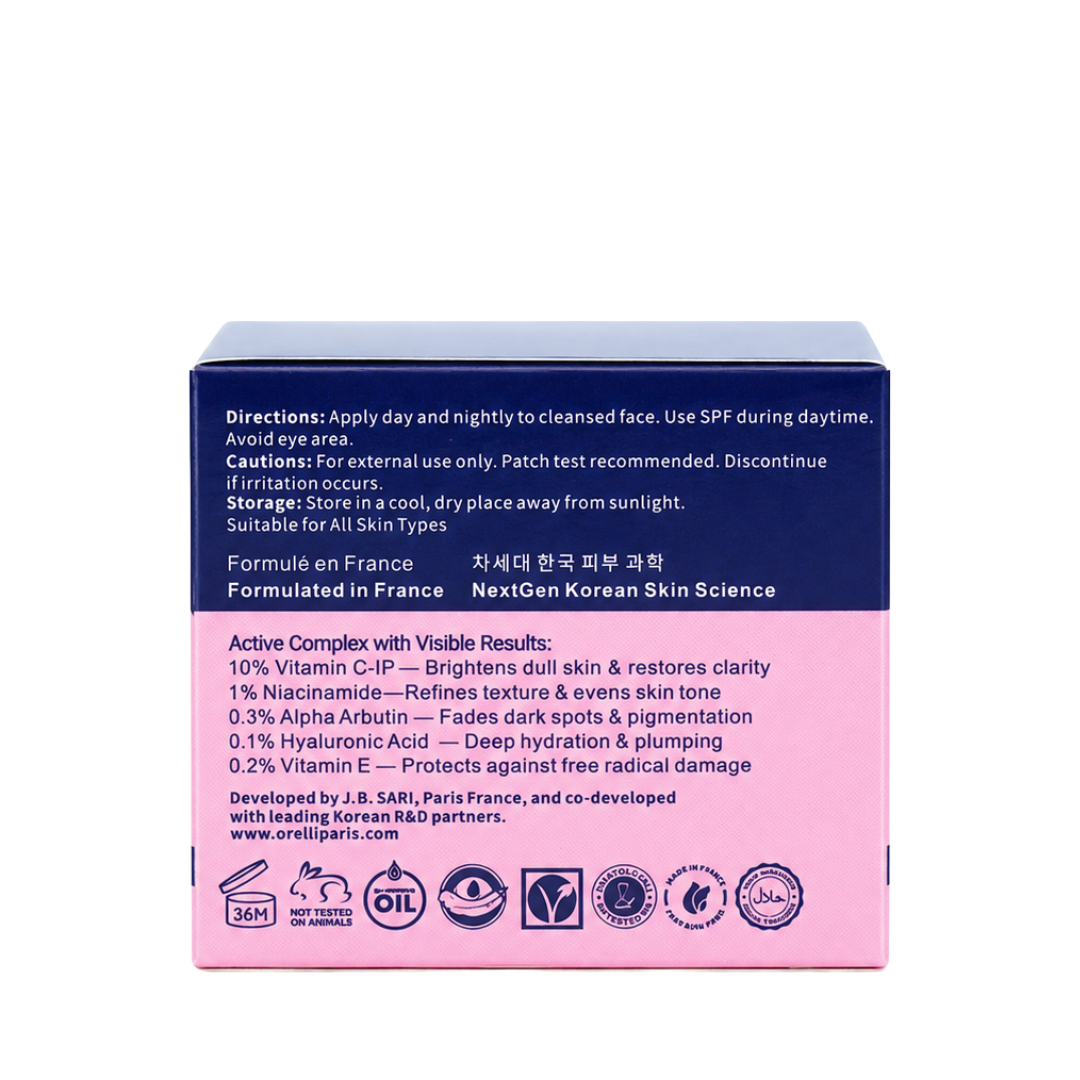
The simplest route is a product where the pairing has already been balanced by the formulator. Our Vitamin C Niacinamide Cream is one example: a moisturiser with 5% vitamin C alongside niacinamide, so both sit in one step. We have written separately about how this cream is designed to support a brighter-looking complexion if you want the product detail.
Option 2: Layering order for vitamin C and niacinamide
If you use two separate products, a common approach is to apply the vitamin C serum first on clean, dry skin, because low-pH L-ascorbic acid formulas are usually designed to go on before other steps. Give it a minute or two to settle, then apply your niacinamide serum, followed by moisturiser and, in the morning, sunscreen. With gentler vitamin C derivatives, order matters less; thinner textures before thicker ones is a sensible rule. Our guide on layering skincare products in the correct order explains the general logic.
Option 3: Split them between morning and night
Many people keep vitamin C for the morning, where its antioxidant role pairs naturally with sunscreen, and use niacinamide at night. This is not because the two clash, but because spreading actives across the day reduces the load on your skin at any one time. It is a particularly comfortable option in humid Indian summers, when several layers can feel heavy under a fan or in air-conditioned offices.
When It Makes Sense to Separate Them
Compatibility is about chemistry; tolerance is about your skin. Consider spacing the two out if any of the following apply:
- Sensitive or reactive skin: fewer actives in one sitting usually means less chance of stinging or redness.
- Flushing after application: some people notice brief warmth or redness with niacinamide, especially at higher percentages. If that happens, separating it from other actives helps you identify the cause.
- Strong L-ascorbic acid at a low pH: high-strength, very acidic serums can tingle on their own. Adding another active right after may push already-sensitive skin too far.
- A compromised barrier: after sunburn, over-exfoliation or a harsh treatment, pause actives and focus on gentle cleansing, moisturiser and sunscreen.
What Not to Stack at the Same Time
Vitamin C and niacinamide are rarely the real problem. Irritation tends to show up when too many strong actives land in the same routine. Using a low-pH vitamin C serum in the same sitting as exfoliating acids (glycolic, lactic or salicylic acid), benzoyl peroxide or a retinoid is where many people run into redness, peeling or stinging.
A calmer structure is vitamin C in the morning, and exfoliants or retinoids on separate evenings, with niacinamide fitting in wherever your skin feels comfortable. If you use a retinoid, check with a doctor if you are pregnant, planning pregnancy or breastfeeding, as retinoids are generally not recommended during that time. Prescription treatments for acne or pigmentation should always be combined under a dermatologist’s guidance.
Patch Test Before Combining
Introduce one new product at a time. Apply a small amount to the side of the neck or behind the ear once a day for several days and watch for itching, burning or rash. Once each product is comfortable alone, try them together, first a few times a week, then daily if your skin stays calm. Mild, short-lived tingling from vitamin C can be normal; persistent burning, swelling or hives are signs to stop and seek advice.
Also check your vitamin C before blaming the combination. A serum that has turned dark orange or brown has likely oxidised and may be more irritating and less useful. Store it closed, away from sunlight and bathroom heat.
If your main goal is fading marks or evening out tone, browse our dark spots and uneven tone collection, and remember that daily sunscreen does more for the look of pigmentation than any pairing of serums.
Frequently Asked Questions
Can I use vitamin C and niacinamide together every day?
Yes, if your skin tolerates both. Start slowly, build up to daily use over a couple of weeks, and back off if you notice lasting redness or dryness.
Which goes first, vitamin C or niacinamide?
Usually vitamin C first, especially a low-pH L-ascorbic acid serum. Follow with niacinamide, then moisturiser, and finish with sunscreen in the morning.
Will combining them cause redness or flushing?
For most people, no. Redness is more often linked to high-strength formulas, sensitive skin or stacking several actives, so spacing products out can help if it happens.
Is a product with both ingredients better than two separate serums?
Not necessarily better, but often simpler. A combined formula means fewer steps and a pairing already balanced by the formulator, while separate serums give you more control over strength and timing.
The Takeaway on Pairing These Two
So, can vitamin C and niacinamide be used together? In most routines, comfortably yes. The old warning grew out of lab chemistry with pure ingredients and heat, not everyday skincare. Choose the format that suits you, whether one combined product, careful layering or a morning and night split, introduce changes gradually, and keep sunscreen as the non-negotiable final step.
This article is general cosmetic information and not medical advice. For persistent skin concerns, please consult a qualified dermatologist.