

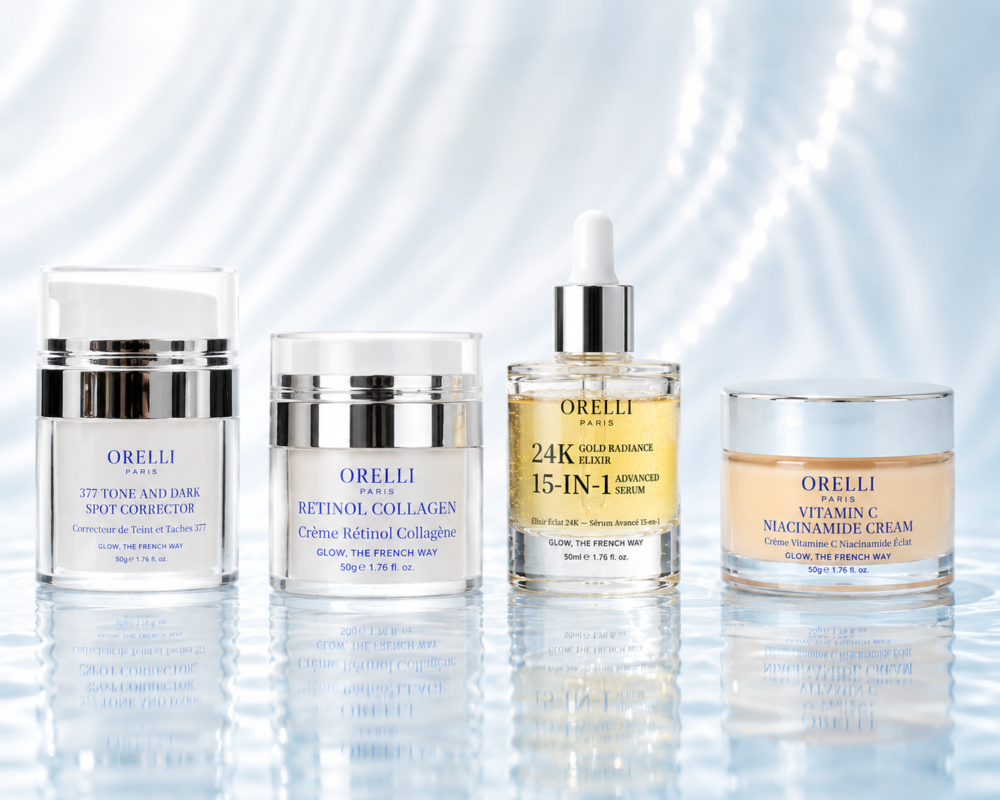
You can own a shelf of well-made products and still get disappointing results if they go on in a muddled sequence. A heavy cream applied before a watery serum acts like a raincoat, and sunscreen smoothed over a slick face oil struggles to form the even film it needs. Learning how to layer skincare products comes down to one simple logic plus a few exceptions. Here is that logic, the skincare layering order for morning and night, and the habits that stop layers pilling in humid Indian weather.
The Core Rule of Skincare Layering Order: Thinnest to Thickest
Apply products from the thinnest, most watery texture to the thickest, richest one. Light formulas spread easily over clean skin; creams and oils are designed to sit on top and help reduce water loss. Reverse that, and the lighter layer struggles to spread evenly.
The American Academy of Dermatology keeps the broad sequence simple: cleanse, then apply any treatment, then moisturise and protect, then makeup. Their page on whether to apply skin care in a certain order also notes that using too many products can irritate skin, especially when more than one anti-ageing product is involved. Everything below is a more detailed version of that same framework.
Two exceptions that override texture
Sunscreen always goes last in the morning, before makeup. It needs to form an uninterrupted layer on the surface, so it should not be followed by further serums or creams, even if some of them feel thinner.
Prescription treatments follow your doctor’s instructions. Some dermatologists want a prescribed gel applied directly after cleansing; others suggest moisturiser first to buffer a strong medication. Their directions take priority over any general chart, including this one.
Where Each Product Type Fits
Cleanser always comes first, so everything else lands on clean skin. At night, after sunscreen, makeup and city pollution, cleanse more thoroughly than in the morning.
Toner or essence is the thinnest leave-on step, so it goes straight after cleansing. Hydrating toners and essences add a light veil of moisture that serums can follow.
Serum comes next. If you use two, apply the more watery one first.
Spot treatment is applied only where needed, usually after serum and before moisturiser, unless the product or your dermatologist says otherwise. Keep it to the spot itself rather than spreading it across the face.
Eye cream goes on before your face moisturiser so a heavier cream does not migrate into the eye area. The AAD suggests using your ring finger around the eyes, as it applies the least pressure on that delicate skin.
Moisturiser seals in the lighter layers beneath it. Gel creams suit oily skin and humid months; richer creams help in dry, air-conditioned rooms or during winter.
Face oil, if you use one, typically goes after moisturiser at night. In the morning it is usually better left out, since oil under sunscreen can affect how evenly it sets.
Sunscreen is the final skincare step in the morning, every day, including cloudy monsoon days.
Masks depend on type. A wash-off mask goes on after cleansing and is rinsed away, after which you continue with toner, serum and moisturiser as usual. A leave-on or sleeping mask replaces or follows moisturiser as the final night step. For a cream-style product such as the PDRN BIO Collagen X Pink Vita Repair Mask, a repair mask with PDRN, hydrolysed collagen, peptides, niacinamide and hyaluronic acid, check the pack instructions to see whether it is meant to be rinsed off or left on, and place it in your routine accordingly.
Morning Layering Chart
The morning routine is about protection, so it stays light. For a fuller walk-through of each step, see our complete morning skincare routine.
| Order | Step | Texture | Note |
|---|---|---|---|
| 1 | Cleanser | Gel, foam or cream | Gentle; rinse with lukewarm water |
| 2 | Toner / essence | Watery | Optional |
| 3 | Serum | Light fluid | Antioxidant serums often suit the morning |
| 4 | Spot treatment | Gel or cream | Only where needed |
| 5 | Eye cream | Light cream | Pat with ring finger |
| 6 | Moisturiser | Gel or cream | Lighter in humid weather |
| 7 | Sunscreen | Lotion, fluid or gel | Always last; broad spectrum, SPF 30 or higher |
Night Layering Chart
At night there is no sunscreen to protect, so richer textures, oils and masks have room. Our guide to a simple night skincare routine covers what each step does.
| Order | Step | Texture | Note |
|---|---|---|---|
| 1 | Cleanser (double cleanse if wearing sunscreen or makeup) | Oil or balm, then gel or cream | Removes the day’s build-up |
| 2 | Wash-off mask | Varies | Occasional; rinse before continuing |
| 3 | Toner / essence | Watery | Optional |
| 4 | Serum or treatment | Light fluid | Prescription products per doctor’s advice |
| 5 | Spot treatment | Gel or cream | Only where needed |
| 6 | Eye cream | Cream | Before moisturiser |
| 7 | Moisturiser | Cream | Can be richer than the morning one |
| 8 | Face oil or sleeping mask | Oil or rich gel-cream | Final layer; optional |
How Long to Wait Between Layers
For most everyday products, you do not need a stopwatch. Waiting until the previous layer no longer feels wet, often around 30 seconds to a minute, is usually enough.
Two places deserve a little more patience. Give your moisturiser a few minutes before sunscreen so the sunscreen can form an even film instead of mixing into a damp layer. And if a product label or your dermatologist specifies a waiting time, for example with some prescription treatments, follow that instruction.
How Much of Each Product to Use
More product rarely means better results, and excess is a major cause of pilling. As a rough guide, a few drops of serum, a small pea-sized amount of moisturiser and a rice-grain dab of eye cream cover most faces. Spot treatments need only a thin film on the spot.
Sunscreen is the exception where people commonly use too little. Apply a generous, even layer to the face and neck, and reapply when you are outdoors for long periods, sweating or after wiping your face, as the label directs.
How to Stop Products Pilling
Pilling, those little rolls of product that appear as you rub, usually comes from too much product, too little settling time, or clashing textures. A few habits help:
- Use smaller amounts and build up only if skin still feels tight.
- Press or pat products in rather than rubbing back and forth.
- Let each layer settle before the next, especially under sunscreen.
- Cut the number of layers; three well-chosen steps often sit better than seven.
- In sticky, humid months, swap a rich cream for a gel texture that sets faster.
Water-Based vs Oil-Based Products
A quick way to place any product is to ask whether it is mainly water-based or oil-based. Water-based products (most toners, essences, hydrating serums and gel moisturisers) go first. Oil-based products (face oils, balms and some rich creams) go later, because oils are more occlusive and water-based layers do not spread well over them.
Don’t Stack Too Many Actives
Layering order solves the “where”, not the “whether”. Piling several strong actives, such as exfoliating acids, retinoids and high-strength vitamin C, into one routine can leave skin red, stinging or flaky, especially when heat or hard water have already stressed your barrier. Keep to one main active per routine, introduced slowly. If you use retinol or other retinoids, note that they are generally not recommended during pregnancy or breastfeeding, so check with your doctor. Our guide on how many skincare products you actually need can help you trim a crowded shelf, and if you have acne, pigmentation or sensitivity that needs treatment, a dermatologist can plan the right combination for you.
Frequently Asked Questions
Does serum go before or after moisturiser?
Before. Serums are usually thinner and more concentrated, so they go on clean skin (or after toner), and moisturiser follows to seal them in.
Should sunscreen go before or after moisturiser?
After. Sunscreen is the last skincare step in the morning, with makeup on top if you wear it. If your moisturiser contains SPF, it can double as your final step, provided you apply enough of it.
Where does face oil go in the skincare layering order?
Usually after moisturiser at night, as the final layer. Some people mix a drop into their cream instead.
Can I skip steps and still layer correctly?
Yes. The order matters more than the number of steps. A cleanser, moisturiser and sunscreen in the morning is a complete routine; see our simple skincare routine for beginners for a starting point.
Putting the Layers Together
Once you understand how to layer skincare products, it becomes intuitive: cleanse, go from thin to thick, keep sunscreen last in the morning, and let prescription instructions override everything else. A correct skincare layering order will not transform skin overnight, but it helps every product you already own do the job it was designed for.
This article is general cosmetic information and is not medical advice. For skin concerns or prescription treatments, consult a qualified dermatologist.