
The simplest way to add vitamin C to your morning skincare routine is to apply a few drops of a vitamin C serum right after cleansing, let it settle for a minute, then follow with moisturiser and a broad-spectrum sunscreen. That order puts the thinnest, most active layer closest to clean skin and seals it in with the products that protect you through the day. A good vitamin C morning routine is less about the “perfect” serum and more about placement, quantity and pacing, which is exactly what this step-by-step guide covers.
If you are still deciding whether vitamin C is right for you, or which form to look for, start with our overview of vitamin C in skincare, its benefits and how to start. This article assumes you already have a product and want to know how to use it well in the AM.
Why Vitamin C Suits the Morning
Vitamin C is an antioxidant. During the day your skin meets UV light, heat and urban pollution, all of which generate free radicals that contribute to dullness and the look of uneven tone over time. Applying an antioxidant in the morning means it is on your skin during those hours. It can work at night too, but mornings make good use of it.
One point matters more than any other: vitamin C is not a sunscreen. It does not carry an SPF and it cannot replace one. Research suggests the two are complementary. A frequently cited study in the Journal of the American Academy of Dermatology found that a topical combination of vitamin C and vitamin E reduced some markers of UV damage in skin compared with either alone. Findings like these support using an antioxidant under sunscreen as an extra layer of defence, not as a substitute.
How to Add Vitamin C to Your Morning Skincare Routine: Step by Step
Step 1: Cleanse gently
Use a mild cleanser or simply rinse with lukewarm water if your skin is dry. Pat the face almost dry with a clean towel. Very wet skin can dilute the serum and make it run; bone-dry, tight skin can make tingling more noticeable. Slightly damp to dry is the sweet spot.
Step 2: Apply vitamin C first
Vitamin C goes on right after cleansing (and after a watery toner, if you use one). For most serums, three to five drops is enough for the face; add one or two more if you also cover the neck. Dot it on the forehead, cheeks and chin, then press it in with your fingertips instead of rubbing hard, keeping it away from the lash line. More product mainly means more stickiness and pilling.
Step 3: Wait about a minute
Give the serum 60 to 90 seconds to settle. You do not need to wait ten minutes. When skin feels dry to the touch rather than slippery, move on.
Step 4: Moisturise
A moisturiser helps cushion any tingle and supports your skin barrier. Choose the texture for your skin type (more on that below).
Step 5: Finish with sunscreen
Sunscreen is always the last skincare step. The American Academy of Dermatology recommends a broad-spectrum sunscreen of SPF 30 or higher, reapplied about every two hours when you are outdoors or sweating. For a fuller view of every AM step and where optional extras fit, see our complete morning skincare routine.
A 4-Week Plan to Introduce Vitamin C
Starting daily from day one is a common reason people give up on vitamin C. A gradual start helps you spot irritation early. Patch test first on a small area, such as the side of the neck, for a couple of days.
| Week | How often (mornings) | What to watch for |
|---|---|---|
| Week 1 | Every other morning (3–4 times) | Mild tingling that fades within a minute is common; stinging, redness or itching is not |
| Week 2 | Five mornings | Check how makeup and sunscreen sit on top; adjust drops if pilling appears |
| Week 3 | Daily, if skin is comfortable | Any tightness or flaking means step back to every other day |
| Week 4 | Daily as a settled habit | Take a photo in the same light as week 1 to judge changes fairly over the coming months |
Visible changes in the look of dullness or uneven tone usually take weeks to months of consistent use alongside sunscreen, so this plan is about building tolerance and a habit, not about quick results.
Skin-Type Tweaks for Your Vitamin C Morning Routine
Oily skin and humid weather
In Mumbai, Chennai or Kolkata humidity, or during the monsoon anywhere, a heavy stack of products can feel suffocating. Use a water-light serum, a gel moisturiser (or skip moisturiser on very humid days if your sunscreen is hydrating enough), and a gel or fluid sunscreen. Three drops of serum is usually plenty.
Dry skin
Air-conditioned offices and dry North Indian winters can leave skin tight. Look for a vitamin C product with hydrating partners such as hyaluronic acid or glycerin, and follow with a cream moisturiser containing ceramides. Apply the serum on slightly damp skin to reduce any dry feeling.
Sensitive skin
Low-pH L-ascorbic acid serums are the ones most likely to sting. Gentler derivatives such as ethyl ascorbic acid, sodium ascorbyl phosphate or ascorbyl glucoside are often better tolerated, though they may behave differently on skin. Stretch the 4-week plan to six or eight weeks, and stop if redness persists. If you have rosacea or eczema, check with a dermatologist first.
Vitamin C Under Makeup and How to Fix Pilling
Vitamin C generally sits well under makeup once sunscreen has set. Pilling, those small rolls of product, usually comes from too much product or layering too fast. Try these fixes:
- Use fewer drops of serum and a thinner layer of moisturiser.
- Wait a minute between each layer instead of applying back to back.
- Press products in; do not rub back and forth.
- Check for clashing textures, such as a silicone-heavy primer over a water-based sunscreen, and swap one if needed.
- Let sunscreen set for a few minutes before foundation or compact.
Our guide on how to layer skincare products in the correct order explains the thin-to-thick rule that prevents most pilling.
What Not to Layer With Vitamin C in the Morning
Keep your AM routine simple. Strong exfoliating acids (AHAs, BHAs) and retinoids are usually better saved for the evening, both to reduce irritation and because retinoids are generally recommended for night use; retinoids are not advised during pregnancy, so speak to your doctor if that applies. Benzoyl peroxide can oxidise some forms of vitamin C, so if you use it for breakouts, many people apply it at a different time of day. Niacinamide, by contrast, is widely considered fine alongside vitamin C; we explain why in whether vitamin C and niacinamide can be used together.
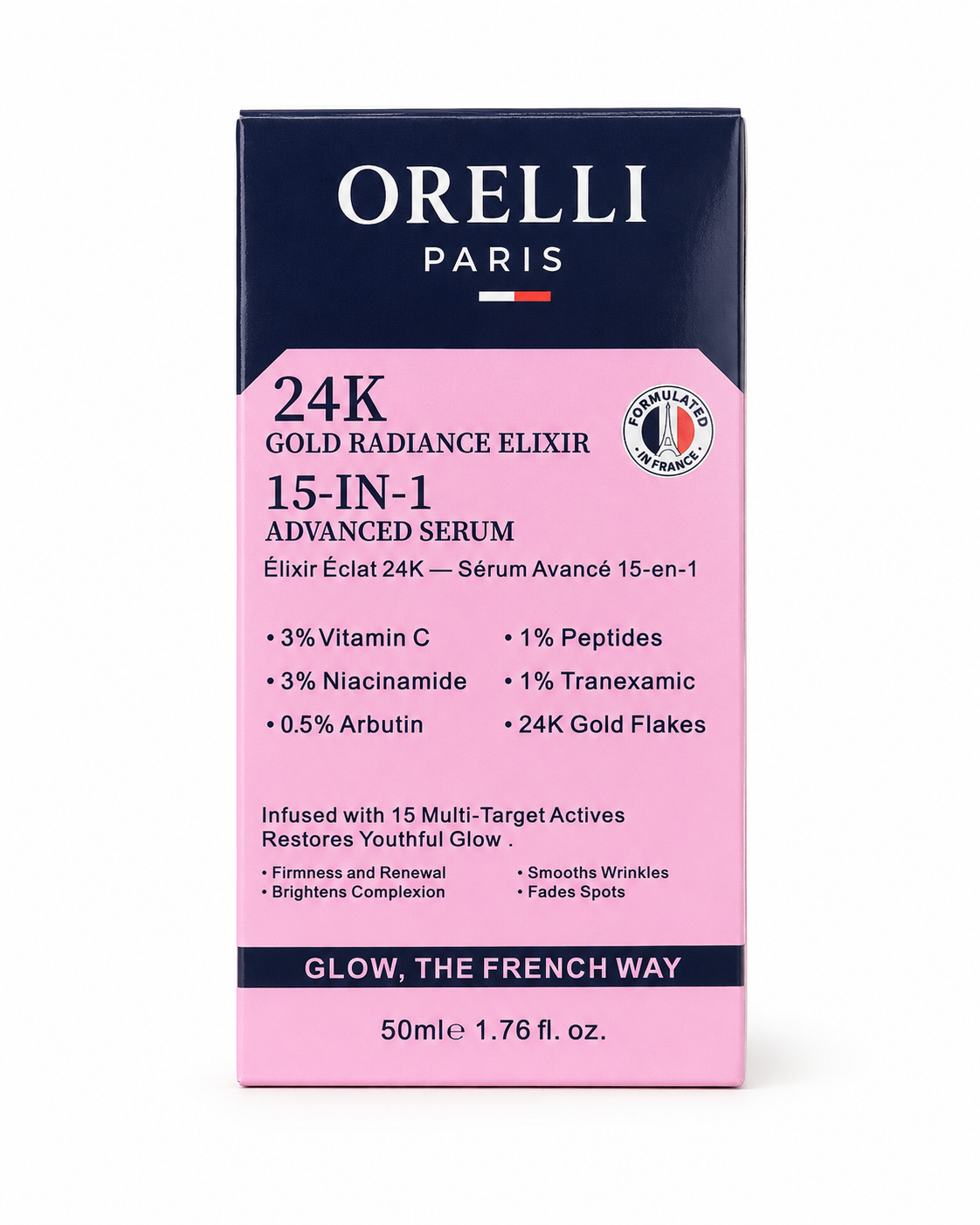
If you prefer fewer bottles, a multi-ingredient serum can cover more than one step. The 24K Gold Radiance Elixir 15-IN-1 Advanced Serum contains vitamin C (as ethyl ascorbic acid) alongside niacinamide, hyaluronic acid, ceramides and peptides, and slots into the same “after cleansing, before moisturiser” position. You can browse more options for tired-looking skin in our dullness and lack of glow collection.
Frequently Asked Questions
Should vitamin C go before or after moisturiser?
Before. Serums are thinner and are designed to go on clean skin, so apply vitamin C first, then moisturiser, then sunscreen. The exception is a vitamin C cream, which can replace your moisturiser step.
How long should I wait after vitamin C before sunscreen?
About a minute after the serum, then apply moisturiser and let it settle before sunscreen. Each layer just needs to stop feeling wet.
Can I use vitamin C every morning?
Yes, most people can once their skin has adjusted. Build up over three to four weeks, and drop back to alternate days if you notice dryness or stinging.
Does vitamin C make skin sensitive to the sun?
Vitamin C is not generally considered photosensitising the way some exfoliating acids are. Even so, it should always be paired with daily sunscreen, since it does not protect against UV on its own.
My vitamin C serum turned dark orange. Can I still use it?
It is best replaced. A shift from pale to deep yellow, orange or brown usually signals oxidation, which may reduce effectiveness. Store the bottle closed, away from heat and sunlight, and use it within the period on the label.
Your Next Morning, Simplified
A vitamin C morning routine comes down to four habits: cleanse, apply a few drops of vitamin C, moisturise, and never skip sunscreen. Introduce it slowly over a month, adjust textures for your skin type and climate, and keep stronger actives for the evening. Done consistently, this small addition can help support brighter, more even-looking skin over time.
This article is general cosmetic information and is not medical advice. For persistent skin concerns, irritation or pigmentation, please consult a qualified dermatologist.