
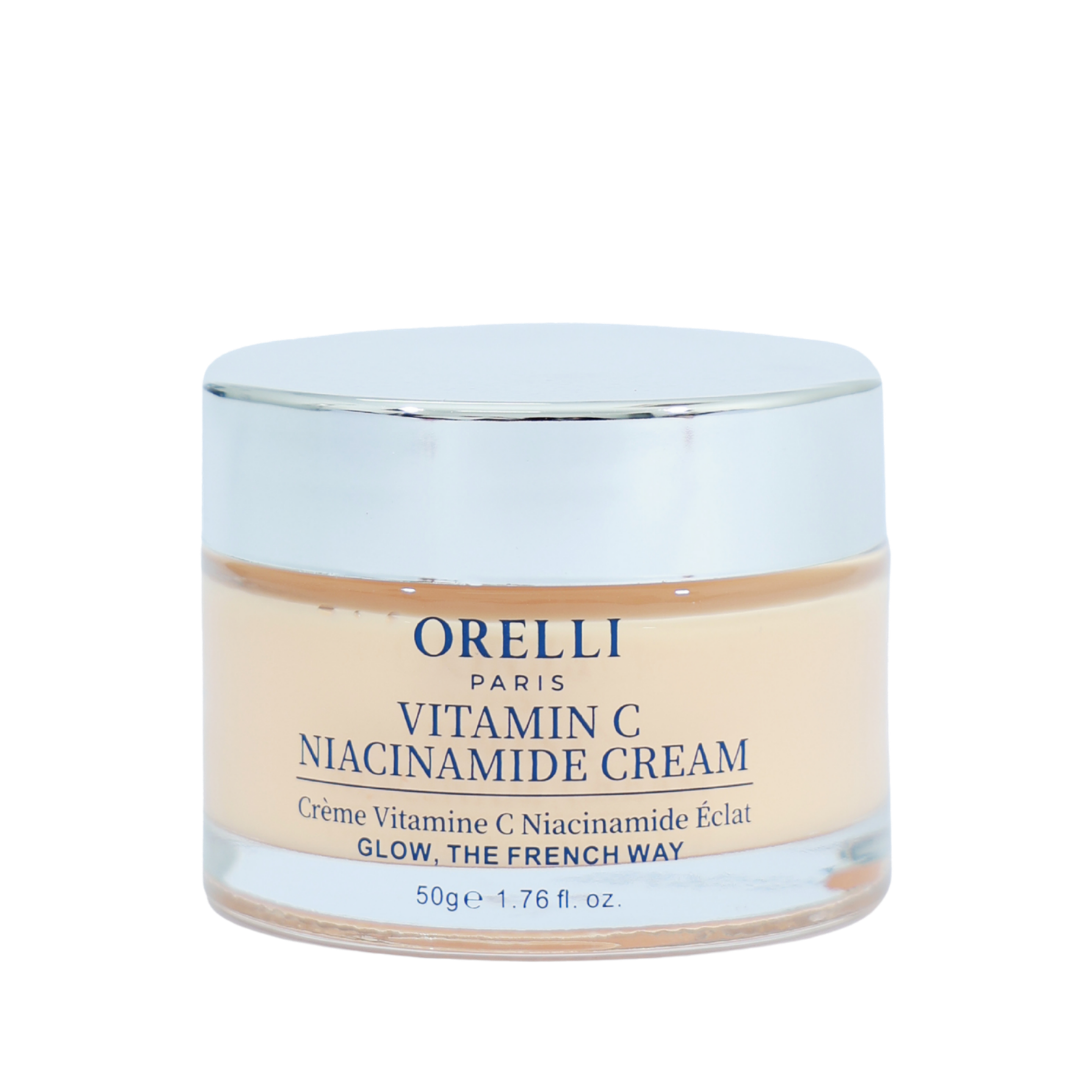
Vitamin C in skincare is mainly valued as an antioxidant: applied to the skin, it helps support defence against the oxidative stress caused by UV and pollution, and over time it can help with the look of dullness and uneven tone. It works best as a steady morning habit layered under sunscreen, not as a quick fix. This guide covers the essentials: what topical vitamin C is, what the research suggests, the main forms you will see on labels and a simple way to start.
Think of this as the overview. Each section stays brief on purpose, so you get the full picture before going deeper into any one part.
What Is Topical Vitamin C?
Vitamin C (ascorbic acid) is a nutrient your body can’t make, so you get it from food. Skin naturally holds vitamin C, but levels in the outer layers can drop with sun exposure and pollution. Eating a balanced diet matters for your overall health, but only a limited share of dietary vitamin C reaches the outer layers of the skin. Topical products are designed to deliver it directly where you want it.
The catch is that pure vitamin C is fragile. It breaks down with light, air and heat, which is why so much of the conversation around it is about formulation, packaging and storage rather than the ingredient alone.
Vitamin C Benefits for Skin: What the Evidence Suggests
A frequently cited review in the Journal of Clinical and Aesthetic Dermatology, Topical Vitamin C and the Skin: Mechanisms of Action and Clinical Applications (Al-Niaimi & Chiang, 2017), summarises the research in three main areas. Keep in mind that many studies are small, and results depend heavily on the formula.
1. Antioxidant support alongside sunscreen
UV rays and pollution produce free radicals, unstable molecules that stress skin cells. Vitamin C helps neutralise them. The review notes that pairing vitamin C with sunscreen (and vitamin E) appears to give better protection against photoageing than either one alone. The key word is alongside. Vitamin C does not absorb UV the way sunscreen does, so it cannot replace SPF. Sunscreen protects your skin; vitamin C adds support.
2. The look of dullness and uneven tone
Vitamin C interferes with tyrosinase, an enzyme involved in melanin production. In practice, regular use may help skin look brighter and more even over several weeks. The same review is clear that it is milder than prescription options for conditions like melasma, which is why stubborn pigmentation belongs with a dermatologist. If you are curious about marks left behind by breakouts, we looked at that question in whether vitamin C really fades acne scars.
3. Supporting the look of firmness
Your skin needs vitamin C to make and stabilise collagen, the protein that keeps it looking firm. In lab studies it also appears to limit the enzymes that break collagen down. On skin, this may help support a smoother, firmer look with consistent, long-term use. Expect gradual change, not a lift.
Forms of Vitamin C at a Glance
On ingredient lists, “vitamin C” can mean several different molecules. Here is a quick orientation; the differences are real but should not be overstated, because the full formula matters as much as the form.
| Form (INCI name) | What to know |
|---|---|
| L-ascorbic acid | The pure, most-studied form. Usually needs a low pH to work, oxidises easily and is more likely to tingle. |
| Ethyl ascorbic acid | A more stable derivative, often chosen for serums and creams. |
| Sodium / magnesium ascorbyl phosphate | Water-soluble, more stable, generally considered gentler; less direct research than pure ascorbic acid. |
| Ascorbyl glucoside | A stable derivative the skin converts gradually; a common pick for beginners. |
| Tetrahexyldecyl ascorbate | Oil-soluble and stable, often found in richer creams and oil blends. |
For pure L-ascorbic acid, the review notes that 10–20% is the range usually studied, with no clear extra benefit above 20% and more chance of irritation. Derivatives work differently, so their percentages are not directly comparable.
How to Start Using Vitamin C in Skincare
A gentle start makes it easier to stay consistent, and consistency is what shows results. A simple approach:
- Begin mild. Choose a lower-strength product or a derivative rather than a high-percentage L-ascorbic acid serum.
- Patch test first. Apply a little behind the ear or on the jawline for a few days before using it on your whole face.
- Use it every other day at first. Move to daily use after a couple of weeks if your skin stays comfortable.
- Apply in the morning, before sunscreen. Cleanse, apply vitamin C, moisturise if needed, then finish with a broad-spectrum SPF.
In India’s heat and humidity, many people prefer a light, single-step texture over layering several serums. A vitamin C moisturiser can do that job. For example, the Vitamin C Niacinamide Cream pairs 5% vitamin C with niacinamide in one moisturising layer. You can read how the two ingredients work together in our piece on how a vitamin C and niacinamide cream brightens skin. The old warning against mixing them came from older studies using pure ingredients at high heat and is now considered largely outdated for modern formulas.
Since sun exposure is one of the main reasons skin looks uneven, it also helps to understand how sun exposure affects the appearance of dark spots. That is where the vitamin C and sunscreen pairing really matters.
Vitamin C Side Effects: Who Should Be Careful?
Topical vitamin C is generally well tolerated, but a mild tingle is common, especially with L-ascorbic acid at a low pH. Redness, stinging that doesn’t settle, itching or dryness are signs to stop or use it less often.
Take extra care if you have sensitive or reactive skin, rosacea, eczema or a damaged skin barrier. Stronger acidic formulas can feel harsh on these skin types, so a gentle derivative at a lower strength is usually easier to tolerate. Avoid starting several new actives in the same week, so that if something irritates, you know which product caused it. If you are under a dermatologist’s care for pigmentation or acne, check with them before adding it.
Storage Basics: Keeping Vitamin C Fresh
Oxidation is vitamin C’s biggest weakness. A product that has turned noticeably yellow, orange or brown has likely oxidised and may be less effective. To slow this down:
- Choose opaque, airless or pump packaging over clear dropper bottles.
- Close the cap tightly and store it away from sunlight and heat. A bathroom windowsill in an Indian summer is not ideal.
- Follow the period-after-opening symbol on the pack, and don’t stockpile large sizes.
Frequently Asked Questions
Can I use vitamin C every day?
Yes, most people can use vitamin C daily once their skin is used to it. Start on alternate days, then increase gradually if you have no redness or stinging.
Should I apply vitamin C in the morning or at night?
Morning is the usual choice because its antioxidant role complements daytime sunscreen. Night use is fine too if it suits your routine better. What matters most is using it consistently.
How long does vitamin C take to show results?
Most people need several weeks to a few months of regular use to notice brighter, more even-looking skin. Changes in the look of firmness take longer still, and daily sunscreen strongly affects how well it works.
Is vitamin C suitable for Indian skin?
Yes, vitamin C can suit all skin tones, including the medium to deep tones common in India that are more prone to lingering dark marks. Start gently, because irritation itself can leave marks on deeper skin tones. Pair it with daily sunscreen, and see a dermatologist for melasma or persistent pigmentation.
Can vitamin C replace sunscreen?
No. Vitamin C supports the skin’s defence against oxidative stress, but it does not block UV rays. Always apply a broad-spectrum sunscreen on top in the morning.
The Short Version: A Steady Habit, Not a Shortcut
Vitamin C in skincare is worth using for antioxidant support under sunscreen, a gradual improvement in dullness and uneven tone, and support for the look of firmness over time. Start with a mild product, patch test, build up slowly, store it well and never skip SPF. If your main goal is more glow, you can also browse our skincare for dullness and lack of glow.
This article is general cosmetic information and is not medical advice. For persistent pigmentation, sensitivity or any skin condition, please consult a qualified dermatologist.