
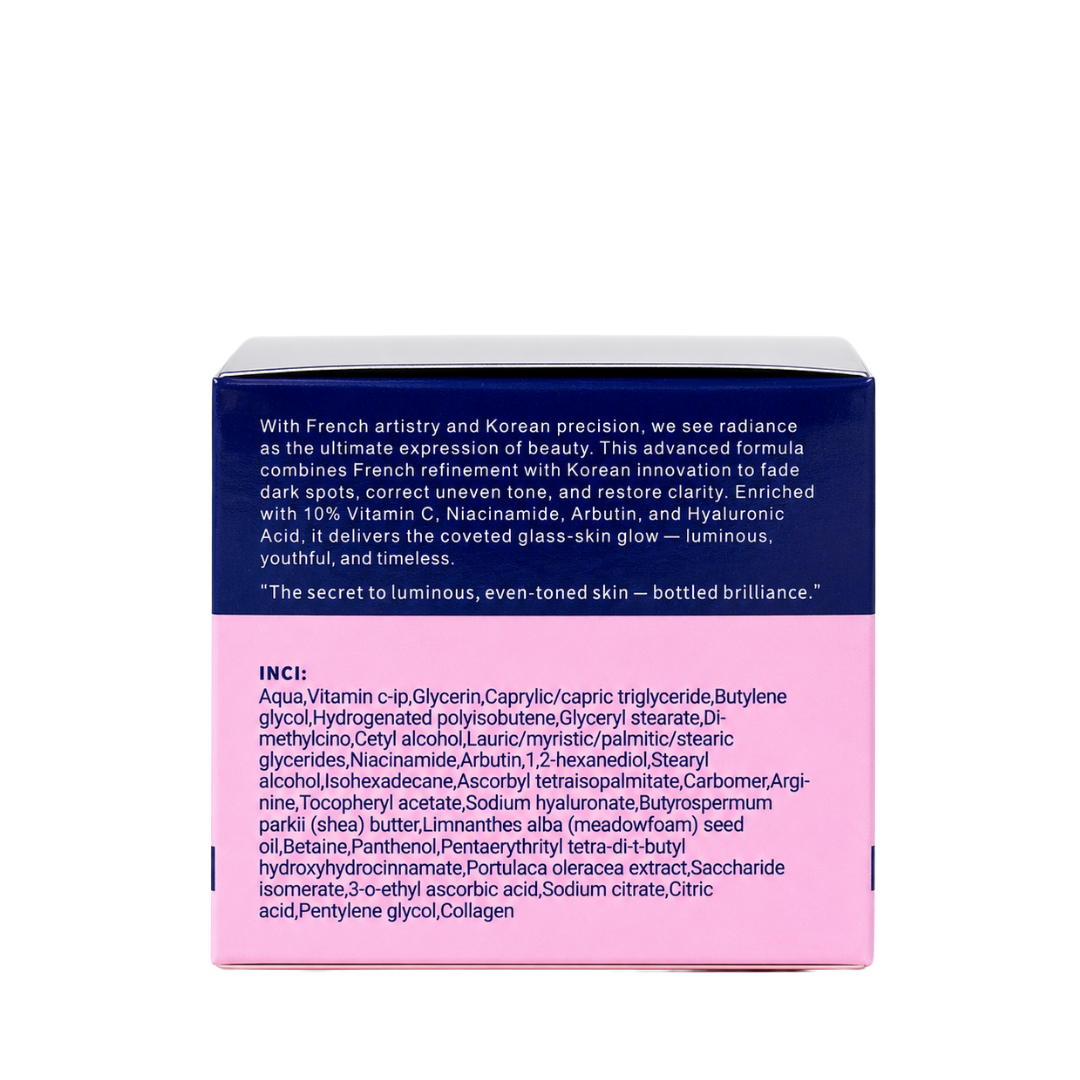
Knowing how to choose a vitamin C serum or cream comes down to a handful of checks: the form of vitamin C, how it is packaged, what it is paired with, a texture your skin will tolerate, and a price you can sustain. The percentage on the front label matters less than most people think. This guide walks through each check so you can pick a vitamin C skincare product with confidence.
New to the ingredient? Start with our overview of vitamin C benefits and how to begin using it, then come back here to shop.
Step 1: Understand the Different Forms of Vitamin C
“Vitamin C” on a label can mean several different molecules. Pure L-ascorbic acid is the most studied form, but it is also the most fragile. Derivatives are more stable and generally need converting in the skin, so they tend to feel gentler but may act more gradually. A simplified comparison:
| Form (as seen on INCI list) | Stability | Typical feel / sensitivity | Notes |
|---|---|---|---|
| L-ascorbic acid (Ascorbic Acid) | Low; oxidises with air, light and heat | Can tingle, especially on sensitive skin | Most researched form; usually in low-pH water-based serums |
| Ethyl ascorbic acid (3-O-Ethyl Ascorbic Acid) | Good | Usually comfortable | Common in creams and serums; works at a milder pH |
| Sodium ascorbyl phosphate | Good | Generally gentle | Water-soluble; often chosen for oily or breakout-prone skin |
| Magnesium ascorbyl phosphate | Good | Generally gentle | Water-soluble; often in hydrating formulas |
| Ascorbyl glucoside | Good | Generally gentle | Vitamin C bound to glucose; popular in brightening lines |
| Tetrahexyldecyl ascorbate | Good | Usually comfortable, slightly oily feel | Oil-soluble; common in oil serums and richer creams |
No single form is “best”. Resilient skin may enjoy the well-researched L-ascorbic acid; reactive skin often does better starting with a derivative.
Step 2: What Vitamin C Percentage Should You Choose?
For L-ascorbic acid serums, a range of roughly 10–20% is the one most often cited. An early absorption study by Pinnell and colleagues found that skin levels rose with concentration up to about 20% and did not increase further beyond that, and that the formula needed a low pH (below about 3.5) for absorption (Pinnell et al., 2001, PubMed). So a 30% serum is not automatically better, and may simply irritate more.
Derivative percentages cannot be compared directly with L-ascorbic acid. The molecules differ in weight, stability and how skin handles them, so judge a derivative on the whole formula and how your skin responds.
A cautious note on pH
Low pH is part of why L-ascorbic acid serums can tingle. Most brands do not print pH, so don’t hunt for it; if discomfort lasts more than a moment, switch to a gentler derivative rather than pushing through.
Step 3: Look for Helpful Supporting Ingredients
The best-known pairing is vitamin C with vitamin E (listed as tocopherol) and ferulic acid. In a laboratory and small human-skin study, Lin and colleagues reported that adding ferulic acid to a solution of 15% L-ascorbic acid and 1% vitamin E improved the solution’s stability and roughly doubled its protection against UV-induced effects compared with the solution without ferulic acid (Lin et al., 2005, PubMed). It is one study, not proof that every such product performs alike, but it explains why the trio is so common.
Other useful companions include hydrators such as glycerin and hyaluronic acid, soothing ingredients like panthenol, and niacinamide. The old idea that vitamin C and niacinamide cancel each other out is largely outdated; it came from older tests using pure ingredients under heat, not modern finished formulas. For a wider view of how brightening ingredients compare, see our guide to what to look for in brightening skincare.
Step 4: Check the Packaging Before the Promises
Vitamin C, especially L-ascorbic acid, breaks down when exposed to air, light and heat. Packaging is therefore one of the most practical things to judge in-store or online:
- Opaque or dark glass rather than clear bottles.
- Airless pumps or tubes that limit air contact each time you dispense.
- Smaller sizes (such as 15–30 ml for serums) that you can finish before the product has a chance to oxidise.
- A sealed or fresh batch with a clear manufacturing or expiry date.
In Indian summers, a cool, dark cupboard beats a sunny bathroom shelf.
Step 5: How to Choose a Vitamin C Serum, Cream or Powder for Indian Weather
Serums are light and layer easily under moisturiser and sunscreen, which suits most skin types. Water-based L-ascorbic acid serums are the most common. Creams combine vitamin C with moisturising ingredients, so they can replace a step, which appeals to people who want a shorter routine. Powders are mixed fresh into a serum or moisturiser just before use; they avoid oxidation in the jar but make it harder to control the amount and consistency.
Climate matters too. In humid cities and during the monsoon, many people with oily or combination skin prefer a watery serum or a gel-cream that sinks in without a heavy film. In dry winters in North India, or if you spend long hours in air conditioning, a cream format may feel more comfortable. As one example of the cream format, the Vitamin C Niacinamide Cream uses ethyl ascorbic acid, a derivative, alongside niacinamide and vitamin E in a lightweight cream texture.
Step 6: How to Read the INCI List and the PAO Symbol
The INCI list is the standardised ingredient list on the back of the pack. Look for the vitamin C form by its INCI name (see the table above). Ingredients are generally listed in descending order of concentration, although ingredients present at low levels (around 1% or less) can often appear in any order. If the vitamin C form sits at the very end, below fragrance and preservatives, the amount is likely small.
The PAO (period after opening) symbol is a small open-jar icon with a number such as “6M” or “12M”. It tells you how many months the product is intended to be used after opening. For vitamin C, treat that as a maximum, and also watch the colour: a serum that has turned noticeably yellow, orange or brown has likely oxidised and is best replaced. Our article on common vitamin C skincare mistakes covers storage and usage habits in more detail.
Budget and Red Flags When Buying Vitamin C Skincare
A higher price does not guarantee a better formula. A mid-priced product you finish before it oxidises often serves you better than an expensive one you ration for a year. Red flags to watch for:
- Claims of “overnight” results, “permanent” whitening or “replaces sunscreen”.
- Very high percentages marketed as automatically stronger.
- No full INCI list, no PAO symbol and no batch or expiry information.
- Clear packaging for an L-ascorbic acid serum, or a product that is already darkened when it arrives.
- Heavy fragrance if your skin is sensitive.
Whatever you choose, vitamin C supports your routine but does not replace a broad-spectrum sunscreen during the day. If you are shopping specifically for a tired, dull-looking complexion, you can browse options by concern in our dullness and lack of glow collection.
Frequently Asked Questions
Which form of vitamin C is best for sensitive skin?
Derivatives such as sodium ascorbyl phosphate, ascorbyl glucoside, ethyl ascorbic acid or tetrahexyldecyl ascorbate are usually better tolerated than pure L-ascorbic acid. Patch test first, start a few times a week, and see a dermatologist if you have a skin condition such as rosacea or eczema.
Is a 20% vitamin C serum better than a 10% one?
Not necessarily. For L-ascorbic acid, research suggests benefits plateau around 20%, and many people do well at 10–15% with less irritation. For derivatives, percentages are not directly comparable to L-ascorbic acid at all.
Should I choose a vitamin C serum or a vitamin C cream?
Choose a serum if you like layering and want a light feel in humid weather; choose a cream if you want vitamin C and moisture in one step. Both can work well.
How do I know if my vitamin C product has gone off?
A clear change in colour to dark yellow, orange or brown, or a change in smell, usually means it has oxidised. Replace it and note the PAO symbol on the next one.
The Short Shopping List
When you are deciding how to choose a vitamin C serum or any vitamin C skincare product, keep it simple: pick a form that suits your skin’s sensitivity, look for protective packaging in a size you will finish, welcome supporting antioxidants like vitamin E and ferulic acid, match the texture to your climate, and read the INCI list and PAO symbol before the marketing copy. A well-chosen product used consistently, with daily sunscreen, will do more for the look of your skin than the highest number on a label.
This article is general cosmetic information and is not medical advice. For persistent pigmentation, irritation or any skin condition, please consult a qualified dermatologist.