

Is retinol worth the fuss, or is it one more ingredient that sounds impressive and then leaves your face red and flaky? For most people the honest answer sits in between. Retinol for beginners works best when you treat it as a slow, patient addition to a routine, not a quick fix. Start gently, protect your skin during the day, and give it months rather than days.
This guide covers what retinol is, who it suits, how to pick a first product and what a realistic first two months can look like, especially in Indian weather.
What Retinol Actually Is
Retinol is a form of vitamin A used in cosmetic skincare. It belongs to a wider family called retinoids. Some retinoids, such as tretinoin, adapalene and tazarotene, are prescription medicines. Retinol is the gentler, over-the-counter member of the family, and skin converts it into its active form in stages. That extra conversion step is one reason it tends to feel milder than prescription options.
In skincare, retinol is valued because it helps support smoother-looking texture, a more even-looking tone and the appearance of fine lines over time. It is not a substitute for medical treatment, and it will not behave the same way on every face.
The American Academy of Dermatology explains the difference between the two groups clearly in its guide to retinoids and retinol, including the advice to begin with the least intense formula you can find.
Is Retinol Right for You Yet?
Retinol can suit many adults, but timing matters. It is sensible to wait if your skin is currently irritated, sunburnt, freshly waxed or recovering from a strong peel. People with eczema, rosacea or very reactive skin often do better getting a dermatologist’s view first, because retinoids can be drying.
Pregnancy and breastfeeding are an important exception. Retinoids are generally avoided during pregnancy, and if you are pregnant, trying to conceive or breastfeeding, skip retinol and speak to your doctor before using any vitamin A skincare.
If your main concern is active acne, a dermatologist can tell you whether a prescription retinoid is a better fit than a cosmetic retinol. For acne-prone skin more generally, our gentle routine for acne-prone skin explains how actives fit around breakouts.
Choosing Your First Retinol Product
Your first retinol does not need to be the strongest one on the shelf. Many brands do not list the exact percentage, so read the product description and lean towards formulas described as gentle, encapsulated or suitable for beginners.
The texture matters too. A retinol blended into a cream with hydrating and cushioning ingredients usually feels kinder than a thin, alcohol-heavy serum. In humid cities such as Mumbai or Chennai, a lighter cream may feel more comfortable. In dry north Indian winters, a richer base can make the adjustment easier.
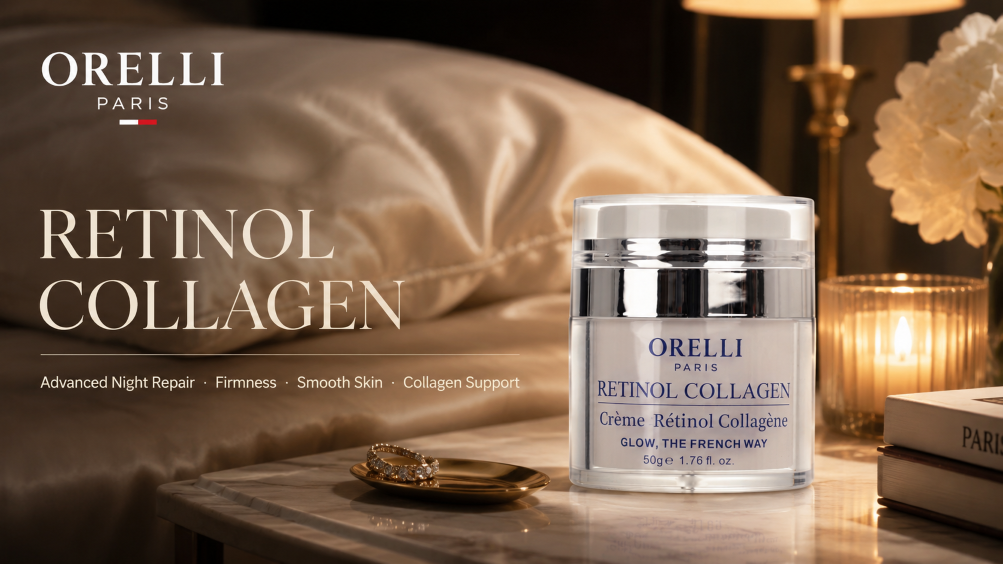
If you prefer a moisturiser-style format, the Orelli Paris Retinol Collagen cream combines encapsulated retinol with hydrolysed collagen and hyaluronic acid. We cover its formula in more detail in our retinol collagen cream deep dive. Whatever you choose, introduce only one new active at a time so you can tell how your skin responds.
How to Start Retinol Slowly: A Realistic First Eight Weeks
The core principle of starting slowly is to use a small amount, apply it infrequently at first and increase only when your skin feels comfortable. A pea-sized amount is usually enough for the whole face. More product does not mean faster results; it mostly means more dryness.
Here is one gentle way to pace the first two months. Treat it as a guide, not a rule.
| Weeks | How often | What to watch for |
|---|---|---|
| 1–2 | Two nights a week, with gaps between | Mild tightness is common; stinging or redness means slow down |
| 3–4 | Every third night if skin feels calm | Some light flaking around the nose or chin |
| 5–6 | Every other night | Skin should feel settled on the nights in between |
| 7–8 onwards | Most nights, only if comfortable | Keep the pace that feels easy, even if that stays at alternate nights |
Some people stay at two or three nights a week for good, and that is perfectly reasonable. Consistency over months matters more than frequency.
The Simple Application Steps
On a retinol night, cleanse with a mild cleanser and pat your face dry. Waiting a few minutes until the skin is fully dry can reduce the chance of stinging. Dot a pea-sized amount across your forehead, cheeks and chin, then spread it thinly, keeping away from the corners of the eyes, the nostrils and the lips. Follow with a plain moisturiser.
On retinol nights, leave out other strong actives such as exfoliating acids or scrubs. You can bring them back later once your skin knows retinol well, ideally on separate nights.
Daytime Protection Matters as Much as the Night
Retinoids can make skin more sensitive to the sun, which is why they are used at night. In India, where UV levels are high for much of the year, daily broad-spectrum sunscreen is essential while using retinol. Reapply when you are outdoors for long periods, and add shade, a hat or an umbrella when you can.
This matters especially for medium to deep skin tones. The AAD notes that irritation can trigger dark marks in darker skin, so a gentle pace plus sun protection helps you avoid trading one concern for another. Our morning skincare routine shows how to keep daytime steps short.
What Results to Expect, and When
Early on, the main change you notice may simply be dryness or a slightly rough patch as your skin adjusts. Visible changes in texture and tone usually take longer. DermNet notes that improvement with topical retinoids can take 12 weeks or longer, so judge your progress over a season rather than a week.
Taking a photo in the same light once a month can help you notice slow change that is easy to miss day to day.
Frequently Asked Questions
What age should I start using retinol?
There is no fixed age. Many people consider retinol from their mid-twenties onwards for texture and early signs of ageing, while others start later. What matters more is that your skin is healthy and calm, and that you can commit to daily sunscreen.
Can I use retinol if I have oily skin?
Yes. Oily skin often tolerates retinol well, but it can still dry out. A lightweight moisturiser on top keeps things comfortable, and a gel-cream texture may suit humid weather.
Is tingling normal when I start retinol?
A brief, mild tingle can happen, especially on damp skin. Persistent burning, swelling or rash is not something to push through. Stop and let your skin recover, and see a dermatologist if it continues.
Can I use retinol under my eyes?
The skin around the eyes is thin and reactive. Keep regular retinol away from the eye corners and lids, and only use a product around the eye area if it is specifically made for it.
Starting Retinol for Beginners, the Calm Way
The best approach to retinol for beginners is quiet and unhurried: a mild formula, a pea-sized amount, two nights a week to begin, a moisturiser every time and sunscreen every morning. Let your skin set the pace. If you want a simple base to build on, our beginner skincare routine is a good place to start.
This article is general cosmetic information and is not medical advice. Please consult a dermatologist for persistent irritation or skin conditions, and a doctor before using retinoids if you are pregnant or breastfeeding.