

PDRN skincare for beginners comes down to three things: buy one simple product, introduce it slowly, and judge it after about a month rather than after a few days. PDRN is an ingredient made from DNA fragments, and on a label it may appear as sodium DNA. What helps is knowing which questions to ask and what a realistic first month looks like.
If you want the science first, start with our explainer What Is PDRN in Skincare? and then read our honest look at PDRN benefits and limitations. This guide is the practical part: how to start, what to expect, and how to decide whether it has earned a place in your routine.
Five Questions to Ask Before Buying Your First PDRN Product
Ask yourself these five questions before you add anything to your cart.
- What do I actually want it to do? The most reasonable goals for a topical PDRN product are skin that feels more hydrated, more comfortable and smoother-looking. If you’re hoping for dramatic change, a cream is the wrong tool.
- Where does the PDRN come from? Most PDRN is derived from salmon or trout sperm (milt). That matters if you’re vegan or have a fish allergy.
- What else is in the formula? PDRN is usually one ingredient among many. Read the full list for hydrators (hyaluronic acid, panthenol), plus fragrance, acids or anything that has bothered your skin before.
- How is it meant to be used? Is it a leave-on cream, a serum or a rinse-off mask? The instructions on the pack decide this, not social media.
- Does it fit my budget for a full month? You need to use a product consistently to judge it, so choose something you can afford to finish.
Also note that “salmon DNA” injections and in-clinic treatments are medical procedures carried out by qualified professionals. A cream or mask with PDRN on the label is a cosmetic product. It is not the same thing and shouldn’t be expected to deliver the same results.
Choosing Your First PDRN Format: Cream, Serum or Mask
PDRN comes in several formats, and for a first-timer the format matters almost as much as the ingredient itself. Here is how the main ones generally compare.
Creams and gel-creams
A cream is the easiest way to begin because it can replace a step you already have: your moisturiser. You don’t add a new layer, you swap one. In humid Indian summers and during the monsoon, a light gel or jelly texture usually feels more comfortable than a rich cream.
Serums and ampoules
Serums are thin and go on before moisturiser. They add a step, so they suit people who already have a steady routine. If you’re new to skincare, start with a cream instead.
Sheet masks and wash-off masks
Masks are the low-commitment option. You use them once or twice a week instead of daily, which makes them a gentle way to see how your skin feels about PDRN. Sheet masks are usually left on for a set time and any leftover essence is patted in. Wash-off masks are rinsed away. Because formats differ, always follow the timing and rinsing directions on the pack.
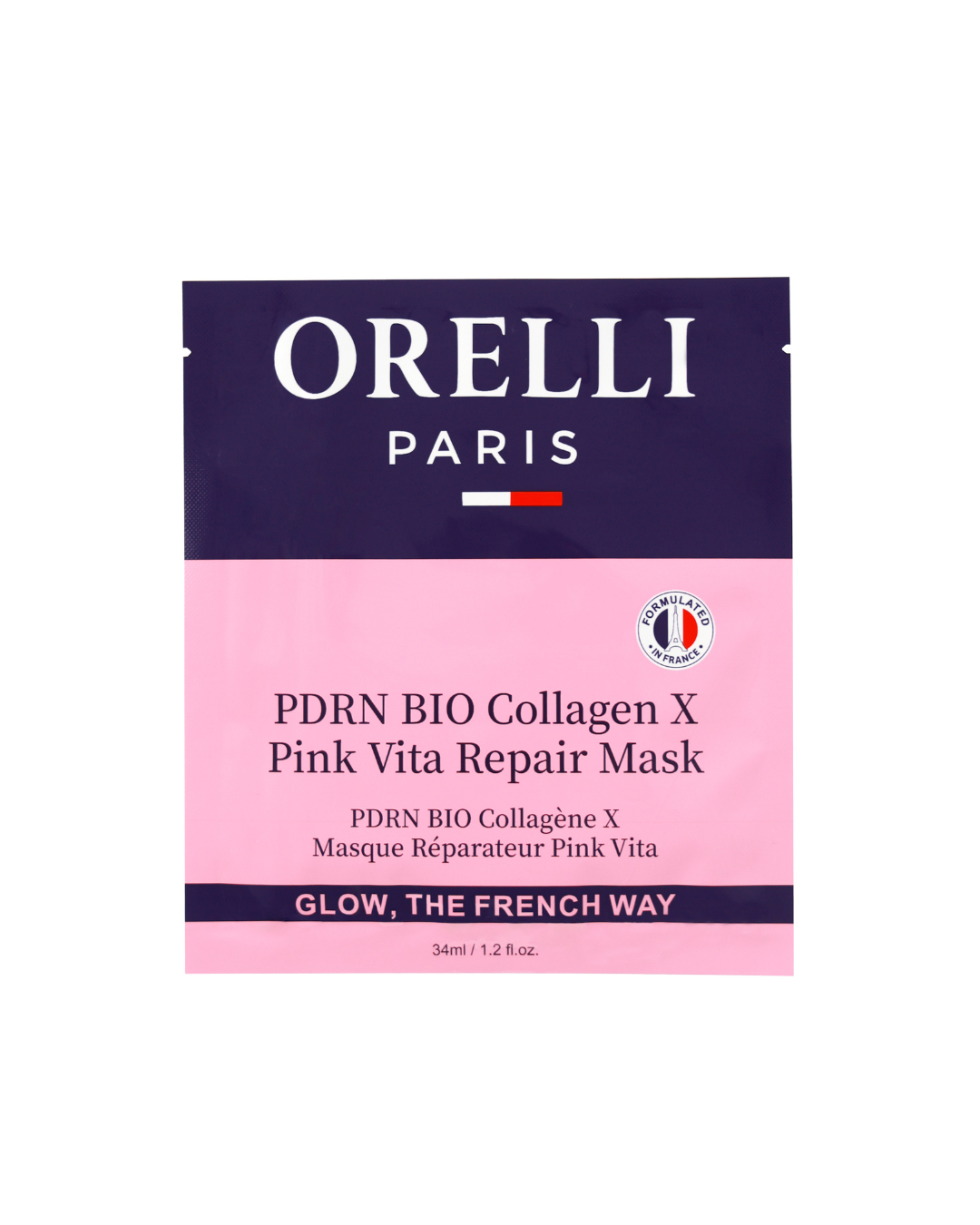
For example, the PDRN BIO Collagen X Pink Vita Repair Mask is a mask format. Check its pack for whether and when to rinse, and how often to use it. Our review of the Pink Vita Repair Mask covers the product in more detail.
Your First Month With PDRN: A Week-by-Week Plan
The safest way to start any new product is to change one thing at a time. The plan below assumes you already have a basic routine of cleanser, moisturiser and sunscreen. If you don’t, set that up first with our simple skincare routine for beginners.
| Week | What to do | What to watch for |
|---|---|---|
| Before you start | Patch test on a small area, such as the inner arm or near the jawline, for several days. | Redness, itching, swelling or bumps. Any of these means stop. |
| Week 1 | Use the product 2–3 times, in the evening only (a mask once). Keep everything else the same. | How your skin feels the next morning: comfortable, tight, or irritated? |
| Week 2 | If all is well, move to every other evening (a mask 1–2 times a week, per the pack). | Any new breakouts in the areas where you apply it. |
| Week 3 | Use it as directed on the pack. A cream can go on daily, morning or night. | Texture after application, how it sits under sunscreen, how your skin feels in AC. |
| Week 4 | Keep going. Take a photo in the same light as on day one. | Hydration, comfort and smoothness compared with your starting point. |
For patch testing, the American Academy of Dermatology’s guide to testing skin care products is a good step-by-step reference.
PDRN Skincare for Beginners: What to Expect Realistically
Keep your expectations modest. Most research on PDRN looks at injectable and medical uses such as wound healing, regenerative medicine and aesthetic injections. There is relatively little research on topical cosmetic creams. A peer-reviewed review of PDRN in tissue engineering and regeneration gives a sense of how much of the interest is clinical rather than cosmetic.
In practice, a well-formulated PDRN product may help your skin feel more hydrated and comfortable and look smoother, much like a good moisturiser. Much of that comes from the whole formula, not PDRN alone. It will not erase lines, fade scars or replace sunscreen. If a product promises that it will “repair DNA” or “regenerate skin”, be sceptical.
How to Combine PDRN With the Products You Already Use
PDRN is generally described as gentle and tends to fit alongside common products. Three simple rules:
Layer thin to thick. A PDRN serum goes after cleansing and before moisturiser. A PDRN cream takes the place of your moisturiser, so you are swapping a step rather than adding one.
Don’t launch two new things at once. If you’re also starting vitamin C, retinol or an exfoliating acid, add them weeks apart so you know which product is behind any reaction. Retinoids need extra care: avoid them during pregnancy unless a doctor advises otherwise.
Keep sunscreen non-negotiable. PDRN does not protect against UV. Finish every morning routine with a broad-spectrum SPF, especially under strong Indian sun.
Is It Worth Continuing? How to Judge After Four Weeks
At the end of the month, compare your day-one and day-28 photos in the same light, and answer honestly. Does your skin feel more comfortable and less tight, especially after AC exposure or washing with hard water? Does makeup or sunscreen sit better? Do you actually enjoy using it?
If the answers are mostly yes and your skin has stayed calm, it’s reasonable to continue. If you see no difference, your current moisturiser may already be doing the job, and there’s no need to pay more for the same result. If you had any irritation, stop and go back to your old routine. For persistent concerns such as acne, pigmentation or sensitivity, see a dermatologist rather than switching products.
If hydration and comfort are your main goals, our dryness and barrier repair collection groups products by that concern.
Frequently Asked Questions
Can I use PDRN skincare if I have a fish allergy?
Talk to your doctor or allergist first. Most PDRN is fish-derived, and while a cosmetic ingredient is highly processed, people with a known fish allergy should get personal advice, check the label for the source, and patch test carefully.
Is PDRN skincare vegan?
Usually not. Standard PDRN comes from salmon or trout. Some brands use DNA-type ingredients from plant or microbial sources, so if this matters to you, check the label or ask the brand directly about the source.
Can I use PDRN during pregnancy?
Check with your doctor first. That’s good practice for any new skincare product during pregnancy or breastfeeding. Show them the full ingredient list, not just the headline ingredient.
Is PDRN suitable for sensitive skin?
PDRN is generally considered gentle, but any reaction depends on the whole formula. Choose a fragrance-free, simple product, patch test first, and follow the slower week-one pace in the plan above.
How long does PDRN take to show results?
Give it about four weeks of consistent use before judging it. Skin may feel more hydrated soon after application, but any change in how smooth or comfortable it looks overall needs regular use over time.
Starting Small, Judging Fairly
The best approach to PDRN skincare for beginners is a patient one. Pick one format that suits your routine, patch test, build up over four weeks, and judge the result by how your skin feels and looks rather than by the hype. If it earns its place, keep it. If not, you’ll still know more about what your skin needs.
This article is general cosmetic information and is not medical advice. Consult a dermatologist or doctor for skin conditions, allergies, or before using new products during pregnancy.