

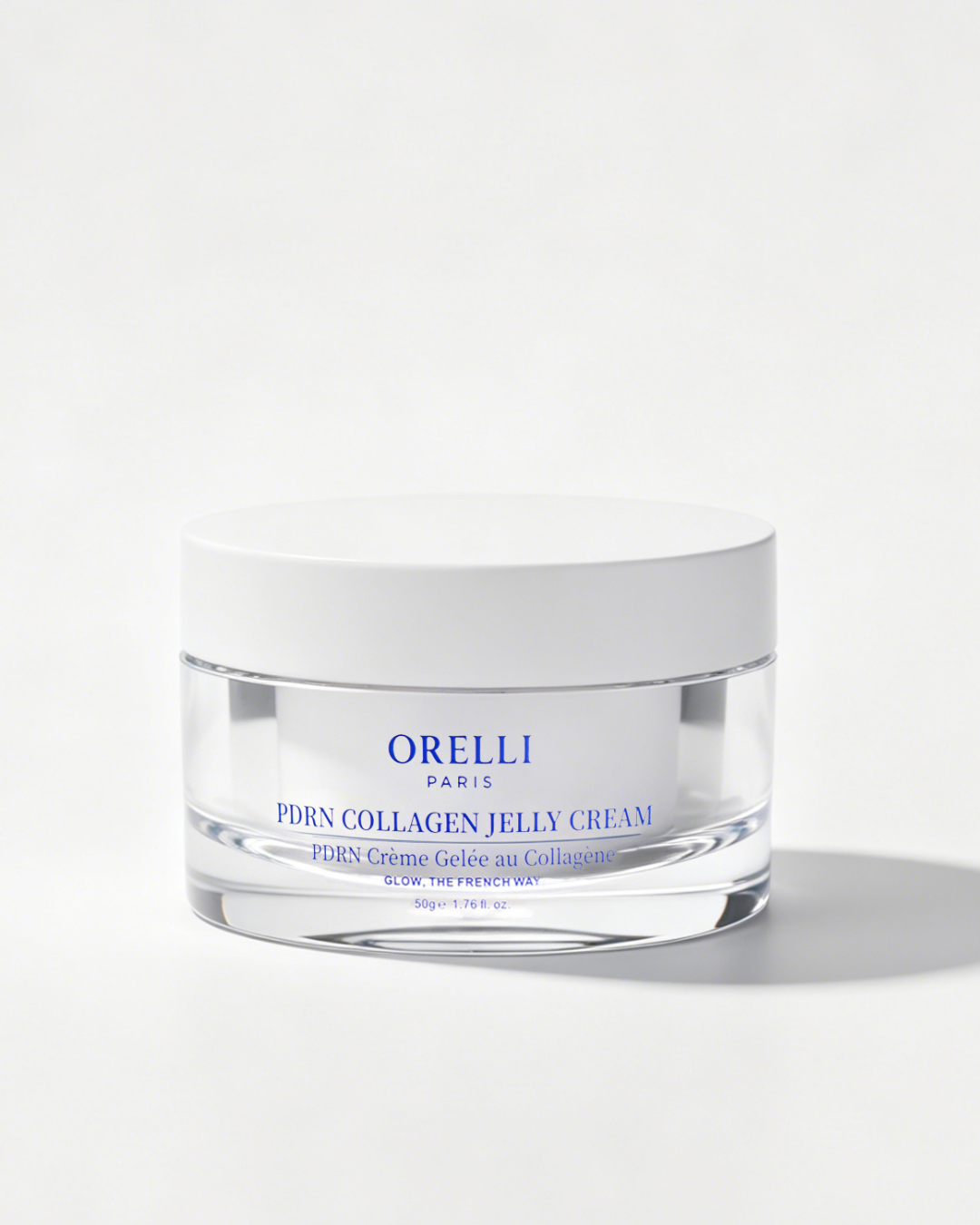
A good PDRN cream is one that is honest about what it contains and well formulated around it. When you are deciding what to look for in a PDRN cream, check four things: where PDRN sits on the ingredient list, which hydrating and barrier-supporting ingredients surround it, whether the texture suits your skin and climate, and whether the claims on the box sound realistic.
This guide is a practical shopping checklist, not an ingredient explainer. If you are new to the ingredient itself, start with our overview of what PDRN is in skincare, then come back here before you buy.
Start With the Ingredient List (INCI)
The front of the pack is marketing; the ingredient list on the back is the useful part. Cosmetic ingredients are listed using standard INCI names, generally in descending order of concentration down to about 1%, after which the order can be more flexible.
What PDRN is called on the label
You will rarely see the word “PDRN” in the INCI list itself. DNA-derived ingredients of this kind are commonly listed as Sodium DNA. The same INCI name can cover both shorter-chain PDRN and longer-chain polynucleotides, so the label alone may not tell you which one a brand used (our piece on PDRN vs polynucleotides explains that difference). If a product advertises PDRN on the front but you cannot find Sodium DNA or a clearly equivalent entry on the back, ask the brand before buying.
Position is a clue, not a verdict
PDRN is typically used at low levels, so finding it in the second half of the list is normal. What is worth noticing is a product built entirely around the PDRN story where the ingredient appears right at the very end, after preservatives and fragrance. That suggests a small, token amount. Most brands do not disclose the percentage, so treat position as a rough hint.
Why Supporting Ingredients Matter in a PDRN Cream
Most published research on PDRN looks at injectable and medical uses, such as wound healing and aesthetic procedures, rather than creams you apply at home (see this review of PDRN’s pharmacological activity and clinical use). Evidence for topical cosmetic PDRN is still limited. In practice, much of what you feel from a PDRN cream (softer, more comfortable, better-hydrated skin) comes from the base formula. That makes the supporting cast important:
- Hyaluronic acid and glycerin: humectants that draw water into the upper layers of skin for a plumper, hydrated look.
- Ceramides: lipids that help support the skin barrier, useful if you live in AC all day.
- Panthenol (provitamin B5): known for helping skin feel soothed and comfortable.
- Peptides: often included to support the look of firmness and smoothness.
- Niacinamide: a vitamin B3 form that helps support the barrier and the look of even tone.
- Squalane: a lightweight emollient that softens without feeling greasy.
A well-built cream usually combines a humectant, something barrier-friendly and a light emollient. If the list is mostly water, thickeners and fragrance with PDRN tacked on, the product is relying on the headline ingredient to do all the work.
Texture: Choosing a PDRN Cream for Your Skin Type and Climate
PDRN creams come in two broad textures, and the right one depends more on your skin and weather than on the active itself.
Jelly or gel-cream textures are water-rich and sink in quickly. They tend to suit oily, combination and acne-prone skin, and they feel easier in humid Indian summers and during the monsoon, when a heavy cream can feel sticky under sunscreen.
Rich or balm-like creams contain more oils and butters. They suit dry, mature or dehydrated skin, north Indian winters, and anyone who spends long hours in air-conditioned offices. Many people use a lighter texture in the morning and a richer one at night. If dryness and a tight, uncomfortable feel are your main concerns, browsing products for dryness and barrier repair can help you narrow your options by concern rather than by trend.
Fragrance, Source and Packaging
Fragrance and essential oils
Fragrance is a common reason for skin reactions. If your skin is sensitive, reactive or recovering from over-exfoliation, a fragrance-free PDRN cream is the lower-risk choice. Look for “parfum” or “fragrance” and named essential oils on the list.
Source transparency
Classic PDRN is most commonly derived from salmon or trout sperm (milt). That matters if you follow a vegan diet, avoid animal-derived ingredients, or have a fish allergy. Some brands now market plant-based DNA ingredients as alternatives, but evidence for these is still early. A trustworthy brand will tell you the source when asked. That is the same principle behind our ingredient transparency page: you should be able to know what you are putting on your skin.
Packaging
Pumps, airless bottles and tubes limit air exposure and keep fingers out of the product, which is helpful in hot, humid conditions. Jars are fine if you use a clean spatula and close the lid properly. Check the batch or manufacturing date and the “period after opening” symbol (the small open-jar icon, such as 12M).
PDRN Cream Claims to Be Sceptical Of
PDRN marketing often borrows from in-clinic “salmon DNA” treatments, which are medical procedures performed by qualified professionals, not creams. Be cautious of phrases such as:
- “Repairs your DNA” or “DNA repair cream”
- “Injection results in a jar” or “skip the clinic”
- “Regenerates skin” or “reverses ageing”
- “Visible results overnight” or “clinically proven” with no study details given
Realistic language sounds like “supports hydration”, “helps skin feel comfortable” or “improves the look of smoothness”. For a balanced view of what topical PDRN can and cannot do, read our guide to PDRN skincare benefits and limitations.
Price and Value
A higher price does not guarantee more PDRN or a better formula. Compare price per millilitre, check how complete the rest of the ingredient list is, and consider whether the cream can replace a step you already use, such as your moisturiser. A cream you enjoy using daily for weeks offers more value than an expensive one you abandon.
What to Look For in a PDRN Cream: Quick Checklist
| Check | What to look for | Red flag |
|---|---|---|
| INCI list | Sodium DNA (or a clearly named equivalent) is listed | “PDRN” on the front, nothing matching on the back |
| Supporting ingredients | Humectants, barrier lipids, soothing agents | Mostly water, thickeners and fragrance |
| Texture | Jelly for oily or humid; rich cream for dry or AC-heavy days | Heavy texture that feels sticky in your climate |
| Fragrance | Fragrance-free if you are sensitive | Strong scent plus several essential oils |
| Source | Brand states where its PDRN comes from | No answer when you ask |
| Packaging | Pump, tube or airless; clear expiry and PAO | No batch or date information |
| Claims | Hydration, comfort, “the look of” language | “DNA repair”, “injection results”, “regenerates” |
Patch Test Before Full Use
Even a gentle cream can disagree with your skin. The American Academy of Dermatology suggests testing a new product on a small area, such as the inner forearm, twice a day for several days before using it on your face. Stop if you notice redness, itching or swelling, and see a dermatologist if a reaction does not settle or if you have a known fish allergy and are unsure about an ingredient.
Frequently Asked Questions
How do I know if a cream really contains PDRN?
Check the ingredient list for Sodium DNA, the INCI name DNA-derived ingredients are commonly listed under. If you cannot find it, or anything clearly equivalent, contact the brand and ask what they used and where it comes from.
Is a PDRN cream the same as a salmon DNA injection?
No. Injectable PDRN treatments are medical procedures carried out by qualified professionals, and most of the research relates to them. A cream works on the skin’s surface and should be judged on hydration and comfort, not injection-style results.
Which PDRN cream texture is best for oily skin in Indian weather?
A jelly or gel-cream texture usually works best. It hydrates without a heavy film, which makes it more comfortable in humidity and easier to layer under sunscreen.
Are PDRN creams suitable for vegans or people with fish allergies?
Often not, because PDRN is most commonly derived from salmon or trout. Check the source with the brand, patch test, and speak to a doctor if you have a known fish allergy.
Buying a PDRN Cream With Clear Eyes
What to look for in a PDRN cream comes down to honesty and good formulation: a clearly labelled ingredient, sensible supporting ingredients, a texture that suits your skin and weather, careful packaging and claims that stay realistic. Read the label, ask about the source, patch test, and give it a few consistent weeks. A thoughtful PDRN cream can be a comfortable, hydrating part of your routine without needing to promise anything more.
This article is general cosmetic information and is not medical advice. For persistent skin concerns, allergies or reactions, please consult a qualified dermatologist.