

Count the bottles on your bathroom shelf. If the number is somewhere past eight and your skin still doesn’t look the way you hoped, you’re not alone. So, how many skincare products do you need? For most people, the honest answer is three: a cleanser, a moisturiser and a sunscreen. Anything beyond that should earn its place by solving a specific concern you actually have.
Below: the essential three, the one or two additions worth making, what to skip, and the signs your routine has become crowded.
How Many Skincare Products Do You Need? Start With Three
Dermatologists at the American Academy of Dermatology describe a simple foundation of cleansing, moisturising and sun protection, and note that limiting the number of products you use can save money and reduce the chance of irritation. Each of these three covers a job nothing else in your routine does.
A gentle cleanser removes sweat, sebum, sunscreen and the pollution film that builds up on city skin. In hard-water areas, a mild, non-stripping formula matters more than a strong one.
A moisturiser helps support the skin barrier. Air-conditioned offices dry skin out even in humid months, so oily skin still benefits from a light gel or lotion, while drier skin may prefer a cream.
A broad-spectrum sunscreen is the step that does the most for the look of dark spots, uneven tone and early lines over time. With strong UV through most of the year in India, it is non-negotiable on any day you’ll be near a window or outdoors.
If you are just starting out, our simple skincare routine for beginners shows how these three fit together morning and night.
The Optional Fourth (and Maybe Fifth) Product
A fourth product is worth adding only when you can name the concern it targets. A useful rule is one concern, one added product. If you have two concerns, look for a formula that addresses both before buying two separate items. The table below is a starting point, not a prescription.
| Your main concern | One product to consider adding | Who can usually skip it |
|---|---|---|
| Dullness, uneven-looking tone | A vitamin C or niacinamide serum (morning) | Those happy with their tone who wear sunscreen daily |
| Dark spots, marks after breakouts | A targeted tone-correcting serum with ingredients like niacinamide, tranexamic acid or alpha arbutin | Anyone without visible pigmentation |
| Early fine lines, texture | A retinol product at night, introduced slowly | Those who are pregnant or breastfeeding, or have very reactive skin |
| Clogged pores, occasional breakouts | A salicylic acid (BHA) product a few nights a week | Dry or sensitive skin without congestion |
| Tightness, dehydration, redness | A barrier-support serum or richer cream with ceramides or panthenol | Oily skin that already feels comfortable |
A fifth product usually only makes sense when you have two distinct concerns that need different timings, for example a vitamin C serum in the morning and retinol at night. Persistent acne, melasma or pigmentation that doesn’t respond to cosmetic care is a reason to see a dermatologist, not a reason to add a sixth bottle.
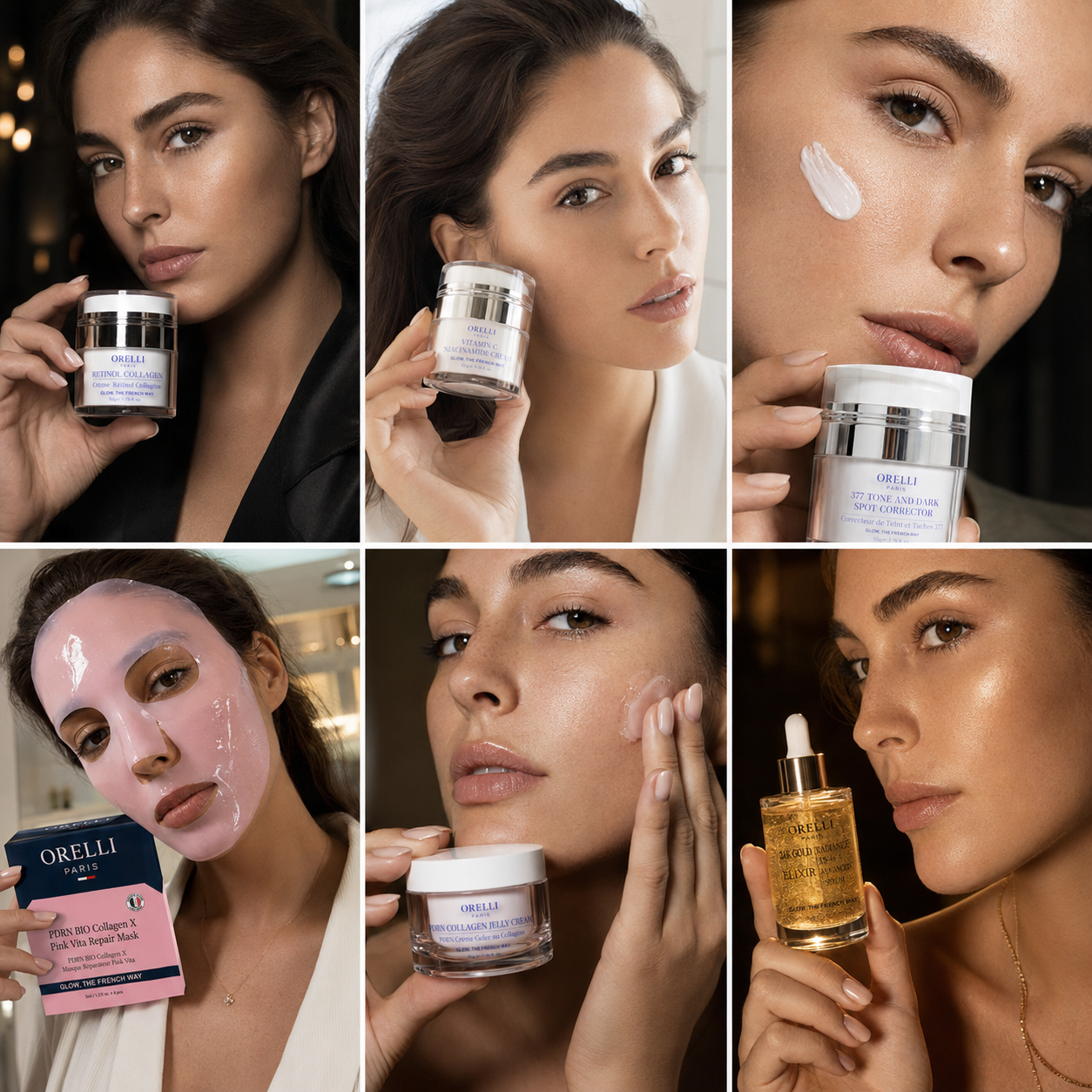
One way to keep the count low is to choose a multi-ingredient serum instead of stacking several single-ingredient ones. The 24K Gold Radiance Elixir 15-IN-1 Advanced Serum, for instance, combines niacinamide, vitamin C (ethyl ascorbic acid), hyaluronic acid, peptides, ceramides, bakuchiol, tranexamic acid and alpha arbutin in one formula, so it can stand in for what might otherwise be three or four separate serums.
If retinol is your added step, avoid it during pregnancy or while breastfeeding and check with your doctor first.
“Extra” Categories Most People Can Skip
These are pleasant but optional, and each has a situation where it does make sense.
Toner. Modern cleansers don’t leave skin at the wrong pH the way old soaps did, so a toner isn’t required. It earns a spot only if it carries something you need, such as a gentle exfoliating acid or a hydrating formula for very dry skin.
Essence. Essences are essentially thin, watery hydrating layers. If your moisturiser keeps your skin comfortable, an essence adds little. It can help in dry winters in North India or for those who dislike heavy creams and prefer layering light textures.
Multiple serums. Three serums with overlapping ingredients often means paying for the same niacinamide twice. More layers also raise the odds of pilling and irritation. One well-chosen serum, or one per time of day, is enough for most people.
Separate day and night creams. Many “night creams” are simply richer moisturisers. One moisturiser morning and night works fine for most skin types. A separate night product makes sense if your daytime layer is a moisturiser with SPF, or if your night cream contains an active such as retinol.
Face mists. Mists feel refreshing in a Mumbai summer or on a long flight, but water alone evaporates quickly and can leave skin feeling drier. Treat them as a comfort item, not a step.
If you’d like a wider look at why fewer products can be a sensible choice, read our take on clean and minimal beauty.
Signs You’re Using Too Many Products
More products isn’t automatically a problem. It becomes one when you notice any of these:
- Stinging, redness or new bumps that appeared after you added something, especially when several actives such as acids, retinol and vitamin C overlap.
- Pilling, where products roll into little flakes as you apply sunscreen or makeup. Too many layers, or layers applied too fast, is a common cause.
- You can’t tell what’s working. If you started four products in the same month and your skin improved or reacted, you have no way of knowing which one to keep.
- Half-used bottles past their date. If products routinely expire before you finish them, the routine is bigger than your habits.
The fix is to pare back to the essential three for a couple of weeks, let your skin settle, then reintroduce one product at a time, giving each a few weeks before judging it. If irritation doesn’t calm down after simplifying, see a dermatologist.
Read the Open-Jar Symbol: Shelf Life Matters
Look for a small open-jar icon on the pack with a number and the letter “M”, such as 6M or 12M. This is the period-after-opening (PAO) symbol, and it tells you roughly how many months the product is expected to stay in good condition once opened. It is separate from any printed expiry date, which applies to the unopened product.
Heat and humidity can shorten how well a product holds up, so store skincare away from a steamy bathroom window and direct sun where you can. Vitamin C formulas in particular may darken as they age. Any change in smell, colour or texture is a reason to stop using it. A useful habit is to write the opening date on the bottle with a marker.
Think in Cost Per Use, Not Price Tag
A product’s price means little on its own. Divide the cost by the number of applications you’ll realistically get before its PAO runs out. A serum you use every morning and finish in two months can work out cheaper per use than a bargain mask you open, use twice and throw away a year later.
Cost-per-use thinking naturally favours a shorter list: products you use daily, finish on time and can judge fairly.
Pressed for time as well as money? Our 5-minute skincare routine shows how a short list fits into a busy morning. You can also browse by what you want to address on our shop by concern page.
Frequently Asked Questions
Is three skincare products really enough?
For many people, yes. A cleanser, moisturiser and sunscreen cover the basics of keeping skin clean, comfortable and protected. Add a product only when you have a specific concern it is designed to address.
Can I use just a moisturiser with SPF in the morning?
You can, as long as it is broad spectrum and you apply enough of it. Many people find it easier to apply a generous layer of a dedicated sunscreen, so if you use a combined product, don’t skimp on the amount.
How long should I test a new product before adding another?
Give each new product a few weeks on its own before introducing the next, so you can tell whether it is helping or causing a reaction.
Fewer Bottles, Clearer Results
So, how many skincare products do you need? Start with three, add a fourth only for a concern you can name, and consider a fifth only when two concerns genuinely need different timing. Skip the extras unless they solve a real problem, watch for signs of overload, respect the open-jar symbol and judge value by cost per use. A short routine you use consistently will usually serve your skin better than a long one you can’t keep track of.
This article is general cosmetic information and is not medical advice. For persistent skin concerns, please consult a qualified dermatologist.